The Forgotten Laugh Club
The Laugh Club! The greatest name for a series of humor books in all publishing history! And they would be sold at a discount! The best thing since the newly invented sliced bread! How could it fail?
It failed. Badly.
Sliced bread – meaning bread pre-sliced by a machine at a factory and sold wrapped in wax paper to maintain freshness – was all of four years old when The Laugh Club was announced in 1932. World-changing innovations had come to a halt In the horrifying depths of the Great Depression; even mundanities like book sales were plummeting, with the price of a new hardback a minimum of $1.50, more than a hardcover costs today in current dollars. Publishers were panicking. A ticket for a double-feature movie that could fill an entire afternoon was down to 25¢. A thick pulp magazine could be picked up from the local newsstand for a mere dime. As with virtually every other industry in the slumping economy, the book trade looked to boost sales with gimmicks and lowered prices.
This gimmick appeared from a seemingly unlikely source. Robert M. McBride, born in 1879, was a fixture in the higher echelons of New York society and a world traveler who wrote a series of books about Europe and knew everyone high and low. When he partnered with the future magazine empire-builder Condé Nast, his name appeared first in McBride, Nast & Co. Yet the high society of the era mixed regularly with writers and entertainers, and McBride is listed as a member of the famous actors’ institution The Players and the less-known but more relevant Dutch Treat Club, home away from home to humor luminaries like Robert Benchley, Rube Goldberg, and Ogden Nash.
McBride’s company, named after himself, specialized in serious nonfiction hunted down personally by McBride during his many trips to Europe. Nevertheless, he was probably more famous for publishing a pair of comic novels that trampled the competition. James Branch Cabell’s Jurgen made headlines when the New York Society for the Suppression of Vice banned the book in 1920 as “offensive, lewd, lascivious and indecent.” Naturally, sales skyrocketed. Even better, McBride won a landmark court case after two years of battle in which the judge ruled that “In my opinion the book is one of unusually literary merit and contains nothing ‘obscene, lewd, lascivious, filthy, indecent or disgusting’ within the meaning of the statute.” At the far side of what constituted a comic novel, 1926 saw the release of Thorne Smith’s Topper, a genial ghost story that ran into a billion printings and was made into a movie and television series.
By 1932, all those earlier successes were old news. McBride continued to publish an eclectic array of titles but he was a small-timer compared to the star publishers. He must have been searching for a new “it” project, one that would capture national attention, would sell no matter how bad the times were. The 1926 and 1927 creations, respectively, of the Book-of-the-Month Club and the Literary Guild, book clubs that were enthusiastically embraced by the general public because they offered premiere books at a lowered price, beckoned. A book club dedicated to humor. Hmm. Sounded good. McBride, with his connections throughout the literary and publishing worlds, made it come to life. In its October 10, 1932, issue Publisher’s Weekly ran a small article that announced the formation of a new book club.
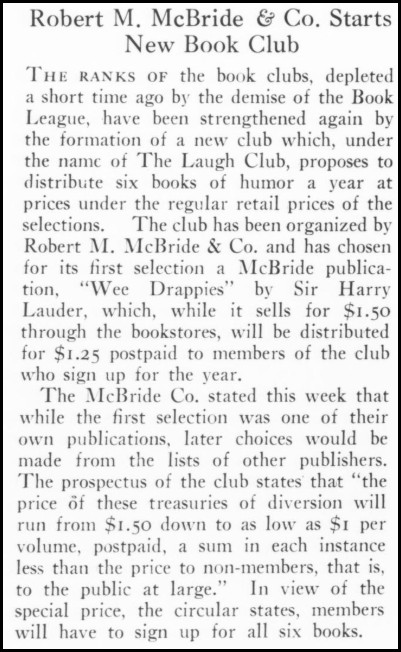
Rather than demanding money up front as the Literary Guild did, McBride’s system put enrollees on their honor to buy all six books at whatever low price, either $1.00 or $1.25, individual selections cost. Limiting the obligation made sense for both sides. People who bought hardbound books during the Depression presumably were dedicated readers, for whom six books over a year would be part of what they would buy in any case. McBride cut possible future losses with an ending date, but could always extend the offer if returns were favorable.
Pretty much everything depended on the books chosen. Getting members to actually pay for the later unannounced books could only work if the chosen titles were first-rate every single time. McBride’s promise that he would scour other publisher’s lists along with his own small number of releases certainly was there to ease readers’ concerns about quality. Respectable publishers had learned the same lessons as snake oil salesmen and politicians: when asking buyers to part with their money to get something unknown back, make the rewards as enticing as possible.
McBride kept dropping press releases, sometimes quoted directly as news, sometimes commented upon by columnists, to keep the flurry of interest alive in 1932. One later announcement stressed that McBride would “ransack the world” (code at the time that meant reprinting books from England) for titles, perhaps even specially commissioning them.
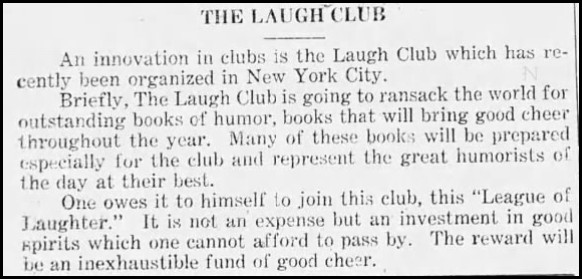
Who couldn’t use “an inexhaustible fund of good cheer” today? OK, maybe this guy. My favorite put-down turned up in the Chicago Herald-Examiner (reprinted in syndication in early 1933).
Believing they have found “a cure for the depression,” several editors have formed the Laugh Club, the program of which calls for the publication, every other month, of “a book of rollicking good humor or healthy irony – anything that will repair America’s normally optimistic frame of mind.”
A pleasant palliative, but as a cure about as effective as a mustard plaster on a wooden leg.
Realities are no more to be changed by laughing at them than by crying over them. Laughter may lighten as tears may increase the individual burden, but that of the nation calls for clear thinking.
Other than that proverbial old man raging at clouds, ordinary readers surely were an audience for rollicking good humor. And what better source than a man who had been providing exactly that for a half-century? McBride used his European connections to reprint a known bestseller for a presumed blockbuster first selection.
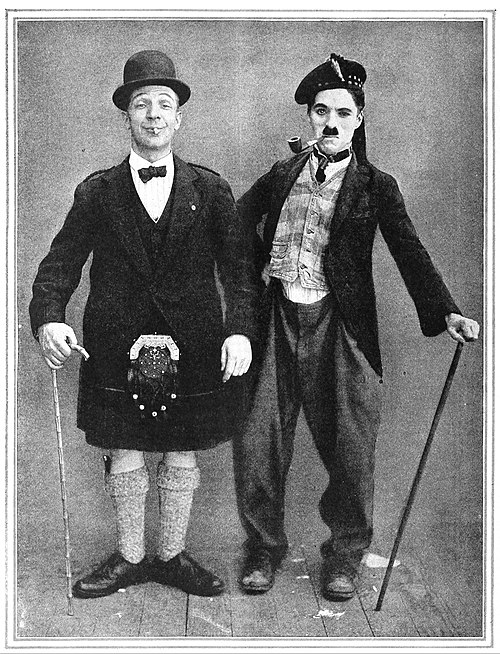
Forgotten today, certainly in America, Harry Lauder, by then knighted and bylined as Sir Harry Lauder, was a giant name in 1932. A Scottish music hall entertainer, always sporting full Scottish regalia from a kilt to a sporran and thick knee-high socks that was as famous a costume as Charlie Chaplin’s Little Tramp, he was the first Brit to sell a million cylinder records. McBride probably ran across the little book of humorous essays when it was published in London in 1931.
McBride’s first press release touted Lauder’s name as a come on. Lauder, someone who could command $15,000 for a brief radio appearance in New York, was a name that could tempt buyers into a contract for a prospective book club.
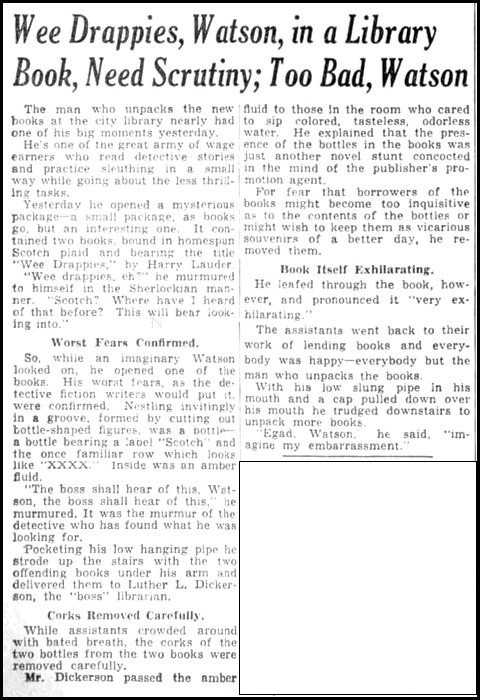
“Wee Drappies” was Scottish for shots of Scotch, probably a better descriptor for short pieces of humor than S. J. Perelman’s pretentious and polysyllabic feuilletons. McBride bought into the gag wholeheartedly by – gimmick of gimmicks – carving out a hole through the pages of text and inserting a tiny fake bottle of scotch. (Sadly, my copy lacks the bottle, but also see my article on Hollow Books for a similar gimmick.) Whatever the cost of such a project – possibly more than ever could be made up by increased sales – was immediately justified by the instant national newspaper coverage of McBride’s own edition even before he announced The Laugh Club.
Lauder’s book drew rave reviews from critics across America. For a while it seemed that McBride’s only problem would be topping – or even equaling – this smash debut. He pushed the theme hard: check out the next five titles: R. N. Linscott’s anthology Comic Relief: An Omnibus of Modern American Humor; The Family Meal Ticket, a collection of humor magazine essays about fatherhood by McCready Huston; Hewitt H. Howland’s anthology of classic American humor Humor By Vote; voted on by top current humorists; bestselling comic writer Irvin S. Cobb with One Way To Stop A Panic, another collection of essays; and Spoofs, an anthology of modern parodies edited by Richard Butler Glaenzer, who was at the time an editor at McBride. A glance at the titles seemingly guaranteed laughs, the authors were well known, and the contents spanned a breadth of interests while hitting sure-fire comic touchstones. McBride even made good on his promise to hit up other publishers. Comic Relief had been published by Houghton Mifflin, although all the rest were McBride’s own.
As all the books were technically reprints, none of them were registered as Laugh Club publications by the Library of Congress, so the exact timing of their releases through the club is not known. The few hints in contemporary articles indicate that releases were essentially simultaneous, although this may have varied with some titles. The originals were registered over less than a year, though, from November 1932 through August 1933, at roughly two month intervals. If Laugh Club members received their books at the same time that the Robert M. McBride editions were released, as implied by the original announcement, these six books would have fulfilled the contract.
If cantankerous critics laughed, then most readers probably did as well. Enough so that McBride seems to have launched a second year of the Laugh Club, with four more books appearing every two months or so from November 1933 to June 1934. A fifth was released in October of 1934. Whether that means a Laugh Club volume I can find no trace of appeared in the missing August 1934 slot is impossible to say. It should exist, as they used to say about a ninth planet before Pluto was spotted and erroneously given as the answer. Anyway, the next series of books included a reprinted British collection of essays by G. K. Chesterton, On Running After One’s Hat; a first novel by Joseph Hilton Smyth, The Nuder Gender; a reprint of Maurice Lincoln’s British novel Oh! Definitely; another British reprinted collection of essays, Bluebells, by E. V. Knox; and Ellis Parker Butler’s wonderfully-titled essay collection, Hunting the Wow. Both the Chesterton and the Knox were part of a series by British publisher Methuen, The Library of Humor, edited by Knox. McBride also reprinted the volume in that series collecting famed Canadian humorist Stephen Leacock, titling it The Perfect Salesman, and that sports a Library of Congress registration of August 1934, making it the perfect candidate for the sixth book in a second series. If I ever can find any mention of the Laugh Club in relation to the title I’ll add it here.
October 1934 would seem to be a certain ending, but McBride had some secrets left. A year later, in October 1935, McBride published Fan Mail, by world-famous explorer and radio announcer Lowell Thomas, and a scan of the Laugh Club edition exists online. Then in November yet another reprint of a British humor institution appeared, Bruce Bairnsfather’s Old Bill Looks at Europe, definitely from the Laugh Club.
What is the evidence that the Laugh Club ran as a separate service for a second and possible third year? Extensive and hair-pulling research has uncovered exactly nothing. Along with my finding a partial lode of books with Laugh Club imprints, ads stating that late titles were selections of the Laugh Club are all I have to go by. The list of other unknowns is extensive. How many readers pledged their money to The Laugh Club. What were the books’ print runs. When were the books released. What reception did they get. Since the books were postpaid, meaning paid for after receipt, what percent of members failed to send in their money. Did the number increase over the course of the year or did some books “sell” more than others. [If modern availability correlates with contemporary sales, Spoofs and Wee Drappies are far easier to find than any of the others.] Did McBride make an effort to solicit a third year’s worth of pledges. Are there more titles from 1935 that haven’t surfaced. Why didn’t any other publisher make a title available to the club after Comic Relief. Did any author whose work was included in the Club get any benefit in recognition or increased sales. For that matter, how many did the McBride versions sell and what impact did the cheaper but idential volumes have on sales.
As Laugh Club imprints of the thirteen titles are much harder to find that McBride editions of the same books, the obvious implication is that the Laugh Club never reached critical mass as a project. I managed to track down copies of ten for my own collection, along with a McBride or two for comparison’s sake. Below you’ll find a short discussion of each title, along with a line from a contemporary review of the McBride edition. Each is pictured, although since dust jackets are rare and pricey today, I’ve used pictures from the internet with credit to the originator if my copy did not come with a dust jacket. Even then, some dust jackets either have completely vanished or, less likely, were never included in the first place.
A terrific idea, living up to most of the extravagant early promises, the Laugh Club might have worked at any time other than the low point of the Great Depression. Why others haven’t replicated it is another mystery. They could easily have independently come up with the idea or something similar even after the original had been forgotten. Books look for readership and readers seek out more of what they already love. Everybody loves to laugh.
The Books
- Wee Drappies, by Sir Harry Lauder (1870-1950)
- Comic Relief: An Omnibus of Modern American Humor, edited by R[obert] N[ewton] Linscott (1886-1964)
- The Family Meal Ticket, by McCready Huston (1891-1973); illustrated by O. Soglow
- Humor by Vote, compiled by Hewitt H. Howland (1863-1944)
- One Way to Stop a Panic, by Irvin S. Cobb (1876-1944)
- Spoofs, edited by Richard Butler Glaenzer (1876-1933)
- On Running After One’s Hat, by G. K. Chesterton (1874-1936)
- The Nuder Gender, by Joseph Hilton Smyth (1901-1972)
- Oh! Definitely, by Maurice Lincoln (1888?-1962)
- Bluebells, by E. V. Knox (1881-1971)
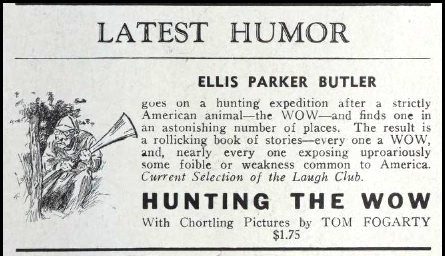
- Hunting the Wow, by Ellis Parker Butler (1869-1937); illustrated by Thomas J. Fogarty
- Fan Mail, by Lowell Thomas (1892-1981); illustrated by O. Soglow
- Old Bill Looks at Europe, by Bruce Bairnsfather (1887-1959); illustrated by the author
Wee Drappies, by Sir Harry Lauder (1870-1950)
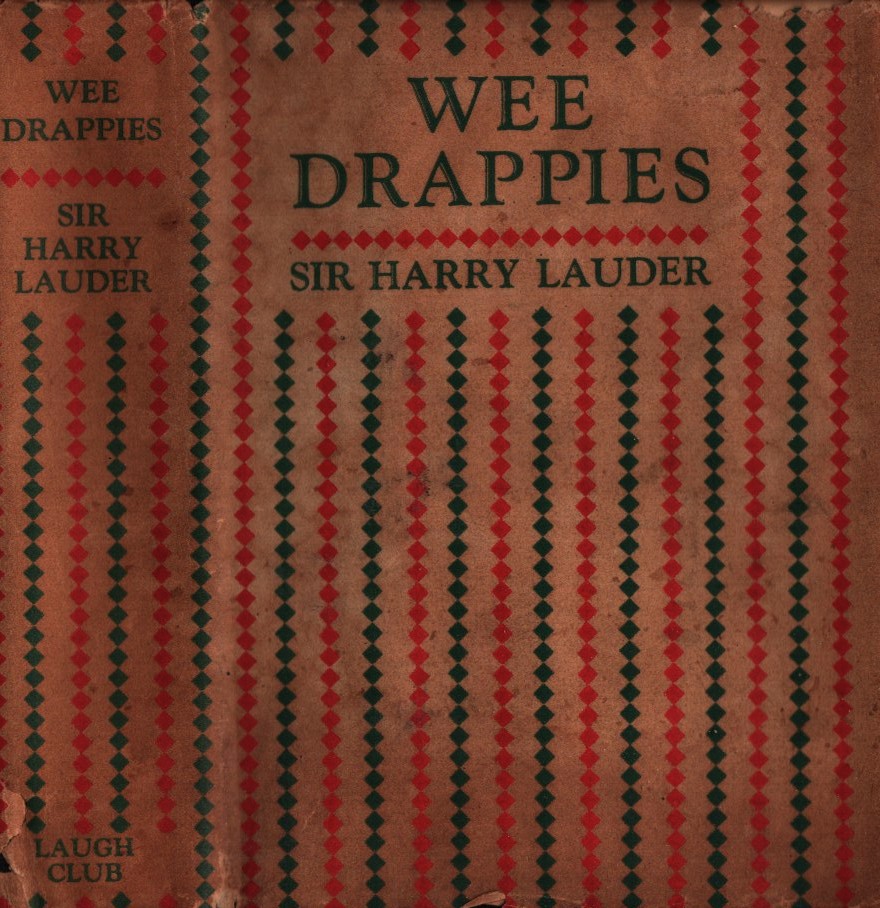
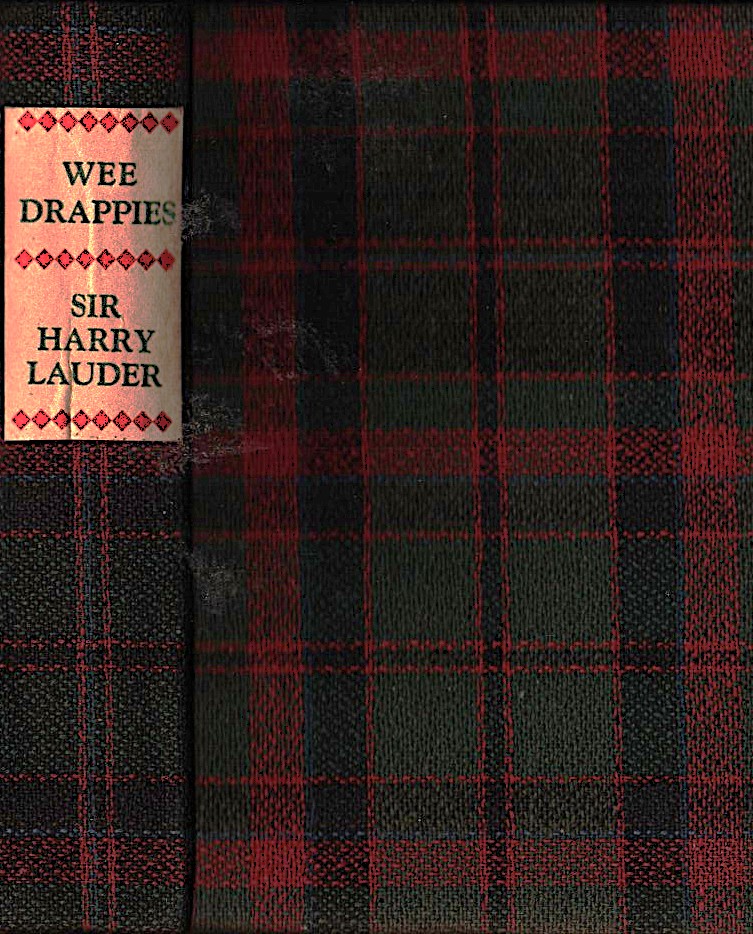
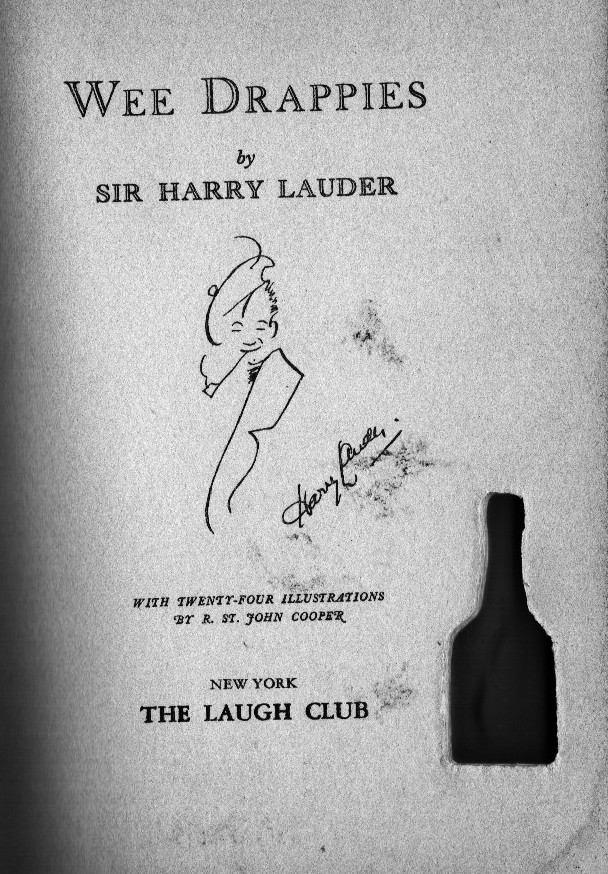
More about Sir Henry Lauder above, if you skipped that section. Lauder provides 23 “Draps” or chapters, plus a “First Taste” and an “End o’ the Bottle”, all filled with anecdotes about adventures in his long-lasting stage career. The dust jacket cover and boards are identical to the McBride edition, but I haven’t seen the inside flaps to compare them. Published in the UK by Hutchinson & Co. in 1931; McBride edition registered with the Library of Congress, December 1932. Nonetheless, adding more to the mysteries associated with the Laugh Club, newspaper mentions started in September. Many of them had caustic remarks about Prohibition, which would not be rescinded until the following year, or the effects of temptation on a deprived public.
While assistants crowded around with bated breath, the corks of the two bottles from the two books [copies of Wee Drappies] were removed carefully.
Mr. Dickerson [head librarian of the Indianapolis Public Library] passed the amber fluid to those in the room who cared to sip colored, tasteless, odorless water. …
For fear that borrowers of the books might become too inquisitive as to the contents of the bottles or might wish to keep them as vicarious souvenirs of a better day, he removed them.
Indianapolis Star, October 6, 1932
The glass in the bottle was real, though. The hollowed out opening seems to have been an invention of McBride’s. I don’t see any reference to it in British reviews. Few American papers could get to a second paragraph without a bottle reference. The timing of the publication was hardly coincidental; Lauder started an American tour later in October.
Comic Relief: An Omnibus of Modern American Humor, edited by R[obert] N[ewton] Linscott (1886-1964)
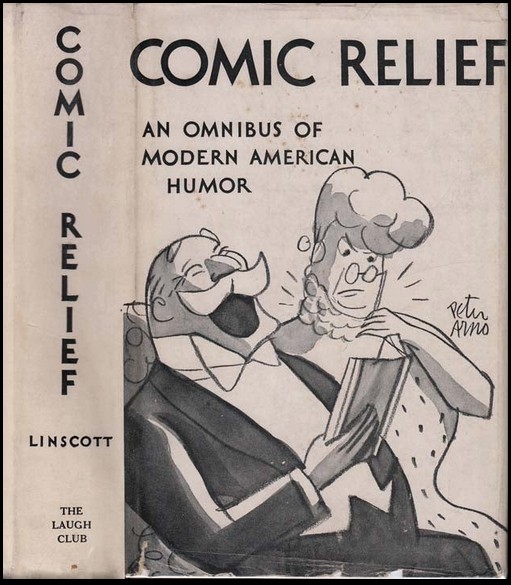
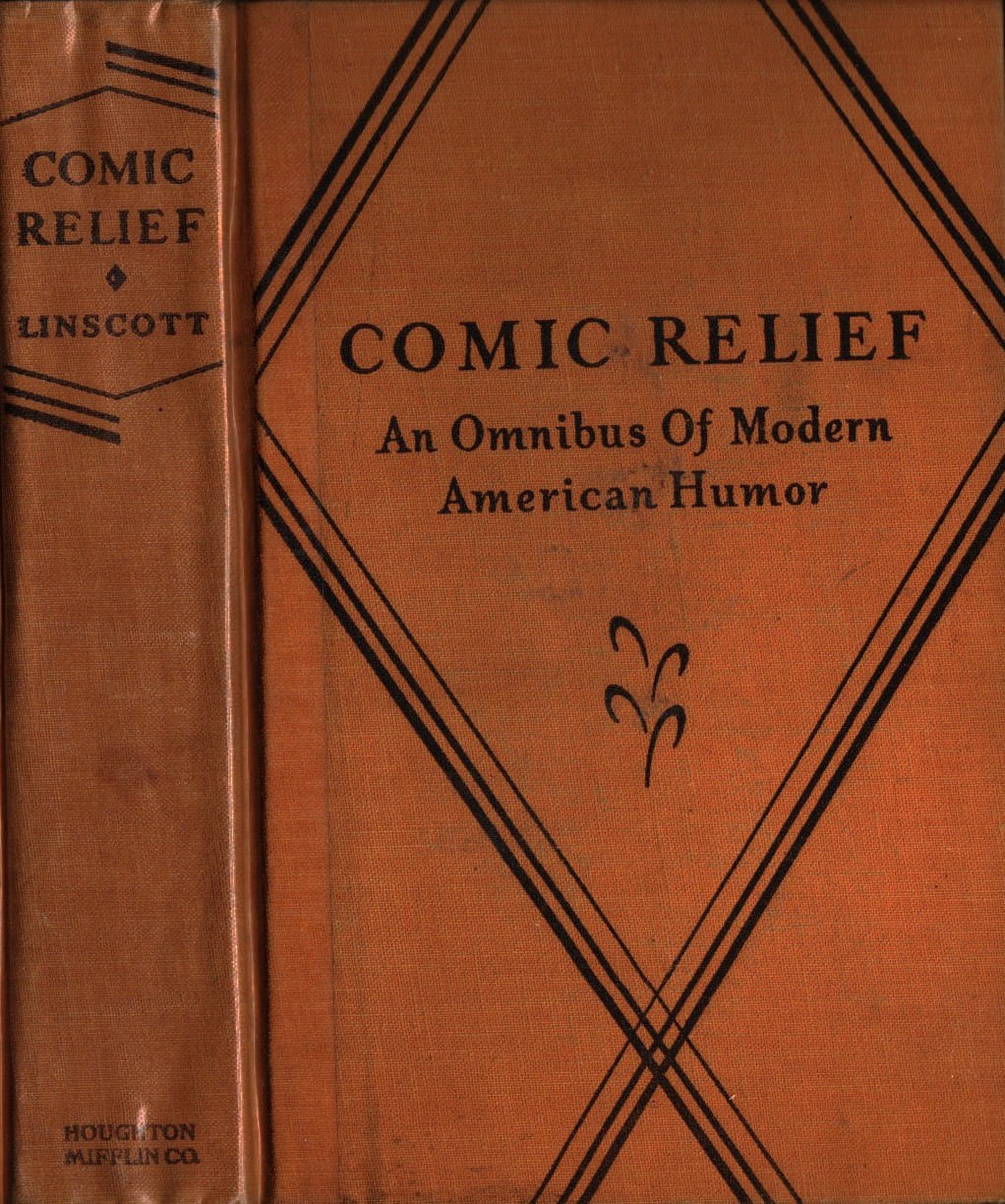
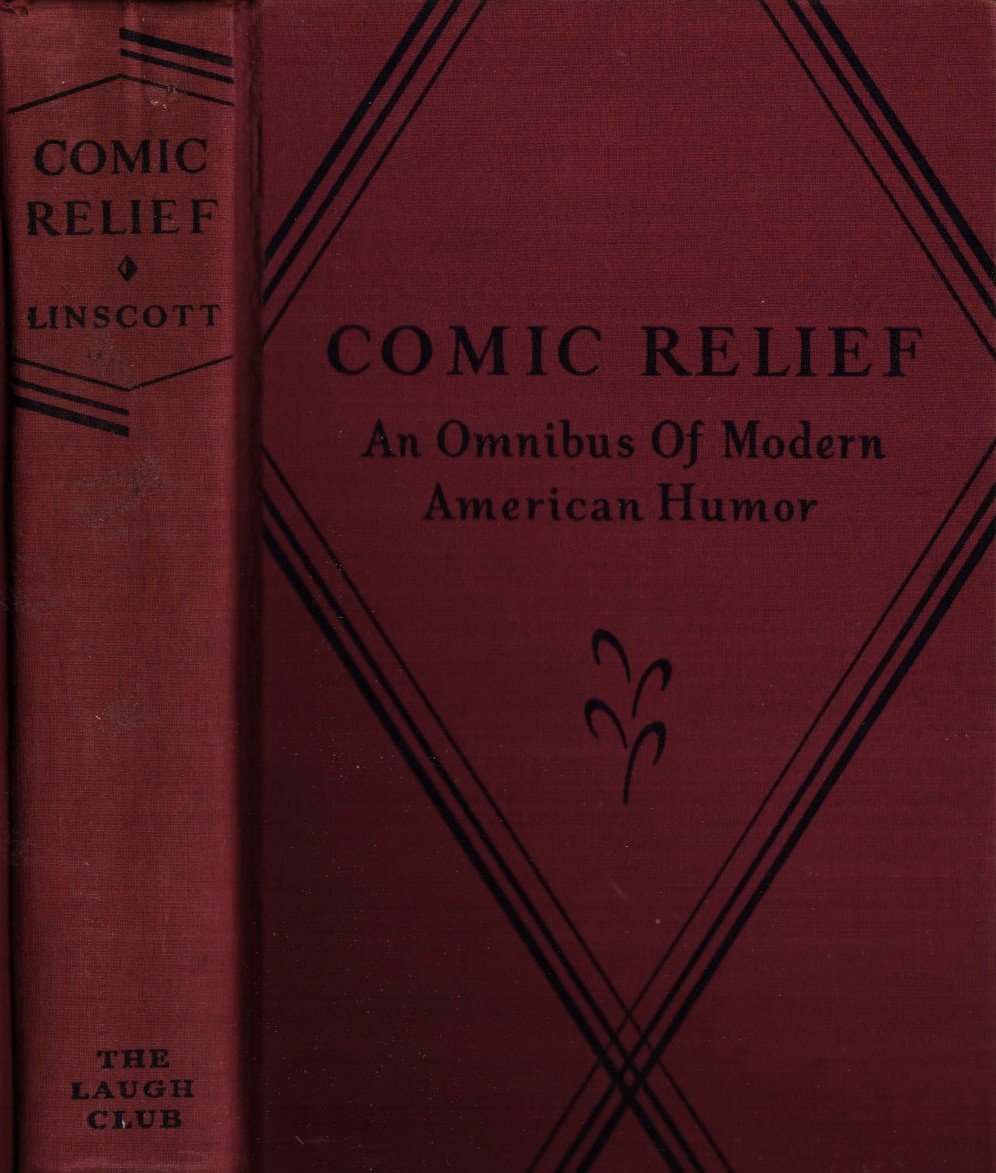
The only Laugh Club not published by McBride, Comic Relief first saw print from the Boston giant Houghton Mifflin. Linscott had been with the firm since starting at the age of seventeen in 1904 and would stay until 1944, before switching over to Random House for thirteen years. One of his first acts there in 1944 was to edit The Best American Humorous Short Stories for the Modern Library. He continued to edit major works, including Bedside Book of Famous French Stories, with Belle Becker (1945), a four‐volume collection of philosophers’ work entitled The World’s Great Thinkers (1947), the Best Short Stories of Bret Harte (1947), State of Mind, a Boston reader (1948), Notebooks of Leonardo da Vinci (1957), and The Letters and Poems of Emily Dickinson (1959), which became a best seller. He worked as a fiction editor and advertising manager for Houghton Mifflin.
Comic Relief is one of the best anthologies of early 20th century humor, and one of the best anthologies of humor ever, in my opinion. Every famous name from the period is represented, usually with one of their finest and now most reprinted pieces. So good was the anthology that Blue Ribbon Books, a reprinter who issued books for far less than a dollar, put out an edition in 1942, titled An Omnibus of Modern American Humor, an Armed Forces Edition paperback appeared in 1945, and a regular mass-market paperback followed from Popular Library in 1949.
Authors being authors, even being selected for inclusion in a best-of-the-best anthology could raise their hackles. Ring Lardner sent Glaenzer a bizarre letter of complaint, dated December 22, 1932.
If you don’t mind, I would rather not give permission for the use of any of my work in Laugh Club publications. I have always been opposed to any story or volume of stories that guaranteed the reader laughs, a practice which puts him on the defensive and is likely to end in alienating any affection he may have had for one’s writing. If I had know that “Comic Relief” was to be peddled on such a basis, I never would have consented to the inclusion of it of any work of mine.
Preventing publishers of humor anthologies from extolling the laughworthiness of their selections is an odd crochet for any author of humor to sustain. Perhaps odder is the fact that Lardner wrote to the Laugh Club and not to the original publishers Houghton Mifflin. According to a review by “M.C.” in the December 11, 1932, Louisville Courier-Journal, they were the culprits.
In spite of suffering under the handicap of anything labeled “this is funny” … “Comic Relief” does succeed in being thoroughly amusing and entertaining.
“The best kind of relief for hard times is comic relief,” a note on the jacket flap declares, with great good sense, “for there is no solvent like laughter for the blues.”
Since I can’t find a single dust jacket online for either edition, or a book for sale with the dust jacket attached, I can’t be sure that the Laugh Club edition, which has differently colored boards and is smaller in size, although probably printed off the same plates, used the same dust jacket. Nevertheless, it was a reprint edition from another publisher. Why blame them?
And what are we to make of the footnote by the editor of Letters from Ring, in which this letter was found, saying “Seymour Glaenzer edited The Laugh Club publication, a series of paperbound books of humor.” He did not and it was not. And who is Seymour? I find no Seymour Glaenzer in the records. Did the editor mix up the name of Richard Butler Glaenzer, who was an actual McBride editor and would do Spoofs for the Laugh Club, or was Seymour a relative who also went into the word business? Apparently by 1979, when this otherwise impressive compilation was published, The Laugh Club was so obscure that in the days before newspaper databases, not a single fact remained in the academic atmosphere.
The Family Meal Ticket, by McCready Huston (1891-1973); illustrated by O. Soglow
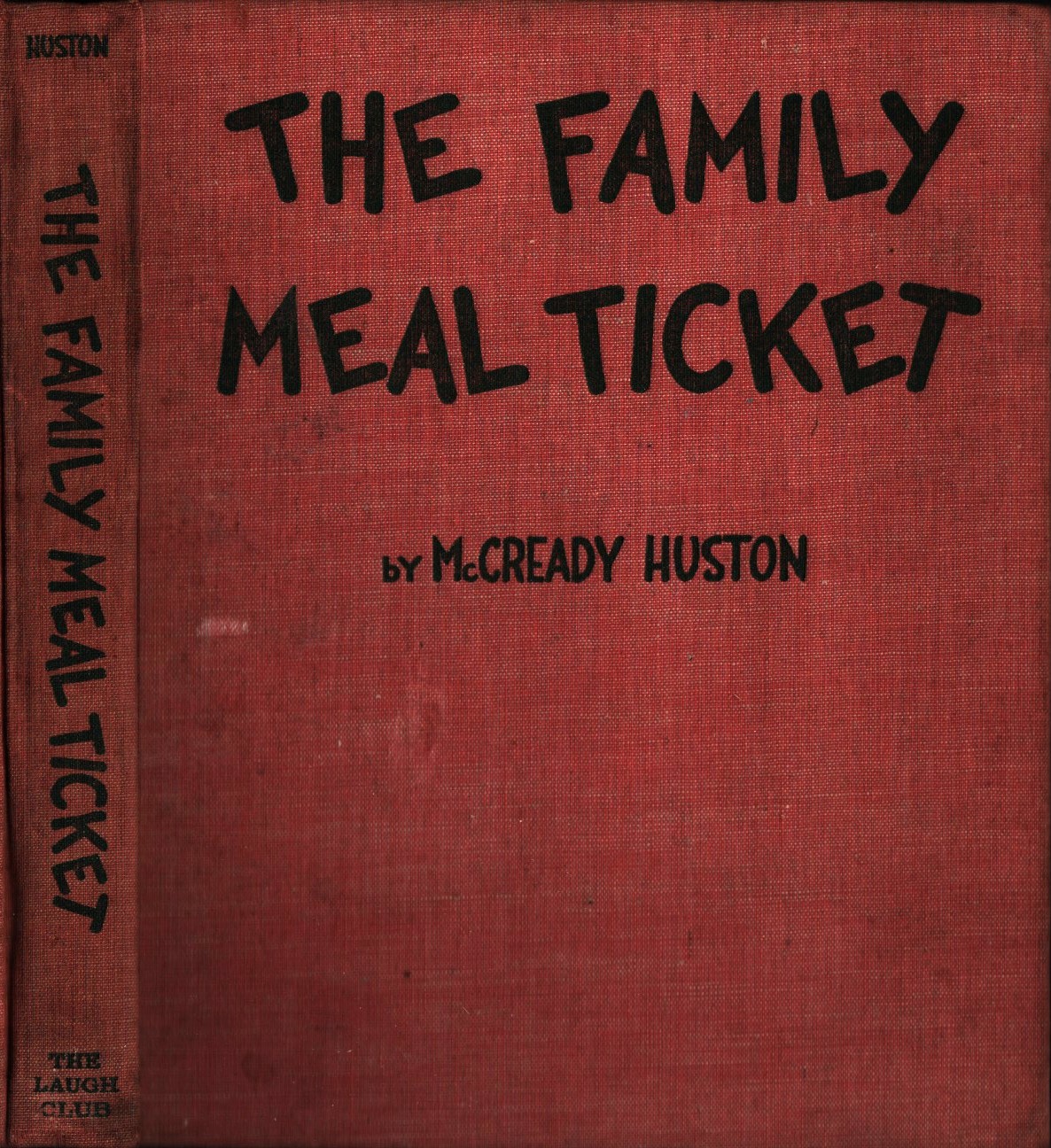
James McCready Huston preferred to drop his dull given name and label himself with the standout heritage-charged middle name of McCready. McCready has a heft to it that would blend well with thick nonfiction tomes, but he apparently dedicated his career to shorter and lighter works. Starting as a reporter in Scranton, he moved to Indiana in 1919 to become an associate editor of the South Bend Tribune and from 1928-1932 rose to editor of the South Bend News-Times. Addicted to typewriters, he also churned out dozens, maybe hundreds, of short stories and short articles over the 1920s and 1930s.
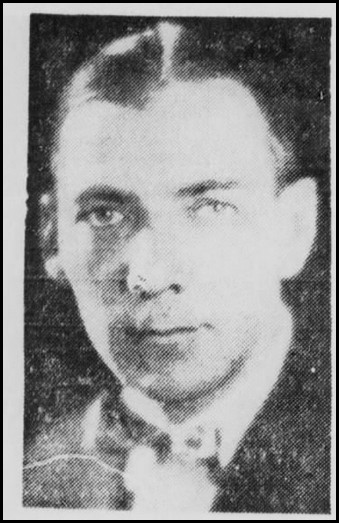
Life was still a humor magazine in those days, with issues crowded with jokes, cartoons, and short humor pieces and stories. Huston’s name appeared regularly for years, among them a series labeled “Letter from a Modern Father,” the sardonic take of a businessman whose countless spoiled children continually dunned him for money while attending their snooty colleges or needed a high-flown lifestyle bankrolled. During the Depression such humor was doomed, so Huston had the father’s business go under, not that that changed the behavior of his children and their many spouses who still saw him as, yes, the family meal ticket. About 80 of these pieces – divided in two sections on his life before the collapse of his business and after – were collected in the book.
As with many humor books compiled from short pieces meant to be read a week or month apart, putting the repetitive narratives together didn’t make for a pleasing book. “The humor contained in the book is of the most elementary and puerile sort,” opined one reviewer.
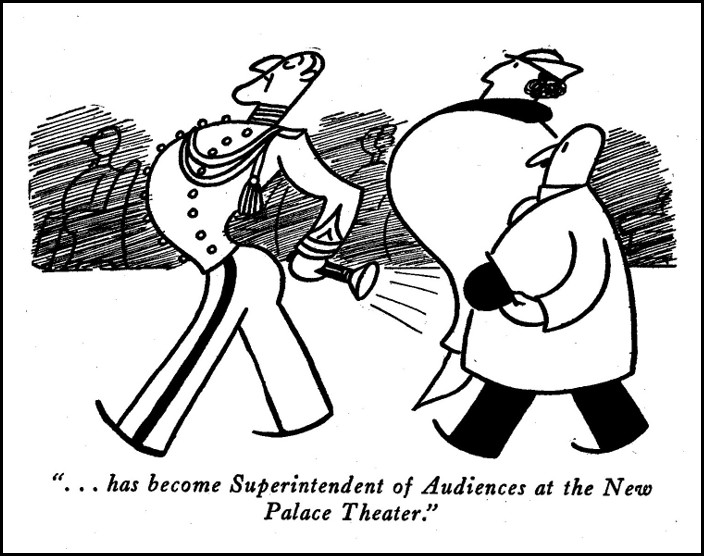
Fortunately, the reviewers couldn’t stop laughing at the cartoons by O. [Otto] Soglow, like this one of the father’s son-in-law, the former president of the New Idea Sales Corporation, taking up his new position as a movie usher.
Oh, well. Just a blip in Huston’s long career. He would continue writing novels for another three decades and retire after a long tenure as editor of Frontiers magazine, put out by the Academy of Natural Science.
I cannot find a dust jacket for this book either. This will be a continuing theme.
Humor by Vote, compiled by Hewitt H. Howland (1863-1944)
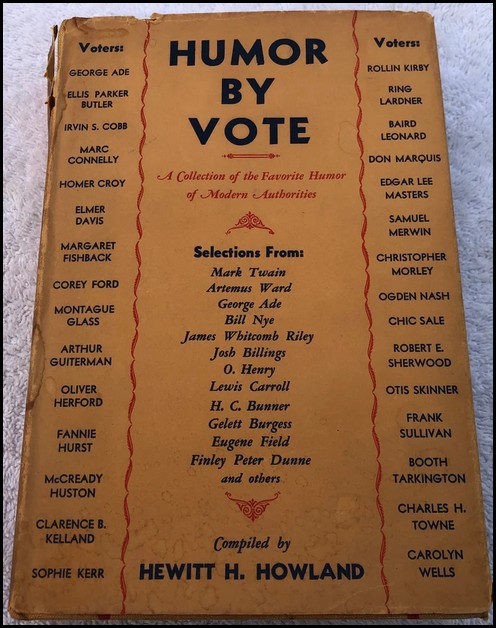
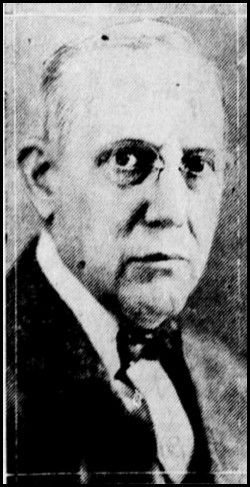
Another proud Indianan, Hewitt Hanson Howland – a name to conjure with – had strong ties to his native Indianapolis. He was editor of the publishing house Bobbs-Merrill and his brother was editor of the Indianapolis News. Still, he received most of his fame when he left for New York and became editor of Century magazine and then fiction editor for the eponymous publisher. How small the world of publishing was and remains is exemplified by his wife being the sister of fellow Laugh Club author Irvin S. Cobb.
Humor by Vote’s title is slightly misleading. A long list of prominent humorists were invited to select a favorite piece of old-time humor, meaning pre-1910, an arbitrary date bounded by the death of Mark Twain. One vote and you were in, a process most politicians would give their first-born for. Almost all the selections were American, and most were early, so this can serve as a major anthology of the wide breadth of 19th century American humor. Interestingly, although four women named selections, no piece by a woman was included.
Collections of 19th century humor flooded the market in the first years of the 1900s but humor changed so completely and so rapidly over the next three decades that the concept of such an anthology seemed to stun reviewers. The New York Times’ anonymous reviewer on May 7, 1933, put it bluntly.
There is a very general conviction that humor loses its appeal with the passage of time, even a comparatively small portion of time, and that what had been one generation’s merriment becomes next door to poison to the next.
Given that the name of this site is Great Forgotten Humorists, all from the 20th century, the truth of this statement can’t be denied. Reviewers were gratified to see old favorites resurrected. Few publishers tried to raise the dead after this. They leave the delightful chore to historians.
One Way to Stop a Panic, by Irvin S. Cobb (1876-1944)
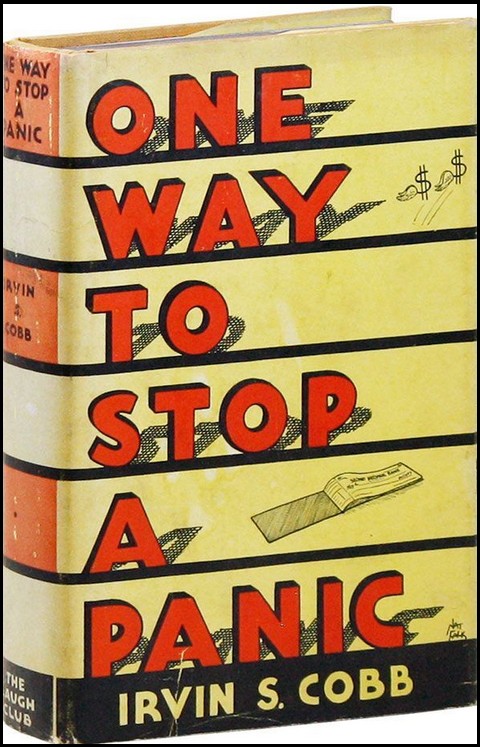
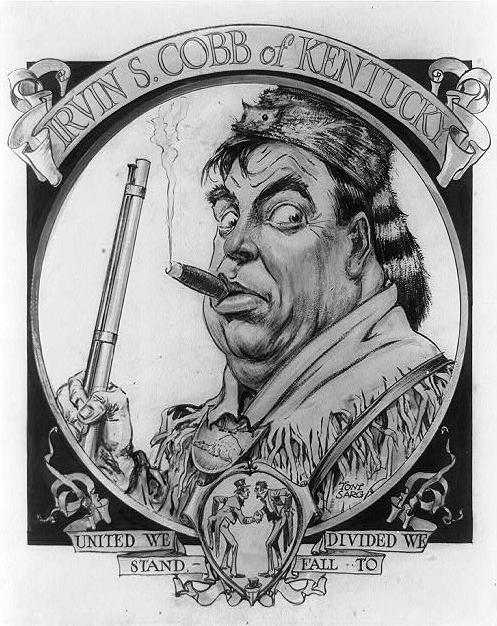
Another regional writer from the Midwest, son of Paducah, KY, the prodigiously prolific Irvin S. Cobb had pumped out over 50 books, most of them collections of short stories, over the previous twenty years. When not writing writing stories – or musical comedies or nonfiction or one-offs – he turned to humor. A series of satiric studies of the states, starting with his native Kentucky, created a sensation, first in magazines, then published as short books, then collected with additional states into a massive collection, Some United States: A Series of Stops in Various Parts of This Nation with One Excursion Across the Line.
You may be astonished to hear that the Peducah Sun-Democrat gave this collection of six short stories a rave review.
Drawing on the springs of his imagination for his 61st book, Irvin S. Cobb has written another volume of short stories calculated to take its place among the foremost fiction of the last few years. …
All of [the stories] shine as exceptional narrative and possess that force and vividness that so quickly gave Mr. Cobb’s books such a wide reading.
To be fair, reviews were generally good, although most of the more objective reviewers judged the title story to be superior and the rest average but entertaining.
Spoofs, edited by Richard Butler Glaenzer (1876-1933)
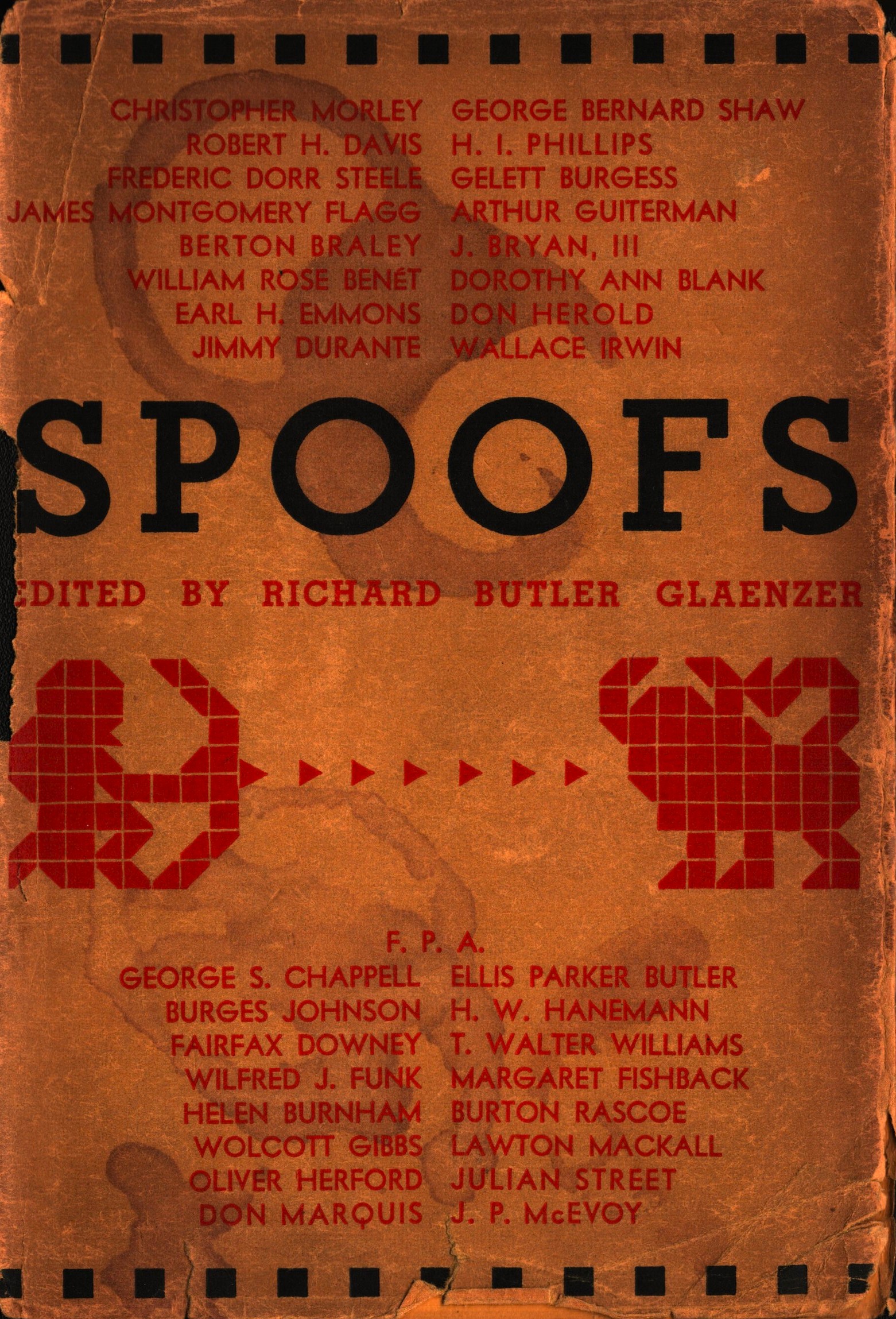
Glaenzer was a poet and an aesthete, but he had to eat. After a short stint as a writer of silent films, he rose in the publishing world to become McBride’s publicity director in 1927 and an editor in 1929. He wrote on art and other highbrow stuff throughout, but didn’t let that destroy his sense of humor. Spoofs, the sixth and last of the first year’s promised book club books, is yet another anthology, featuring 45 pokes against pomposity, many authors included more than once. The humor in them is better than whatever this is on the front flap, which I solemnly assert to be verbatim.
Yoho! Here are japes by a band of humorists quite as rollicking as the crew of the good ship Pinafore. Shanghaied, as it were, while dozing in their hammocks, they wake to find themselves on the sloop-of-war, Amerberjane or Impertinence, so rechristened after purchase from the Akhund of Swat. A spiffy craft, a spooky crew that bristles with healthy scorn for hokem of every color and stripe. Some thirty-three of these lively blades – three well-trained elevens of them – answer the muster roll. Note the line-up on the jacket; salute their flag, the modern Jolly Roger, the Archer and the Bull, appropriate to a constellation of jolly stars. The Archer is the spoofer, my hearties; the Bull the spoofee. The spoofer also twists its tail.
Are some books better without a dust jacket? Anyway, the reviewers flipped past that nonsense and gave the insides good marks. One wrote, “Any spoof, chosen at random, is a veritable ‘wow’.” Modern wow hunters now have proof that the word was faddish enough to justify the title you’ll soon see below.
On Running After One’s Hat, by G. K. Chesterton (1874-1936)
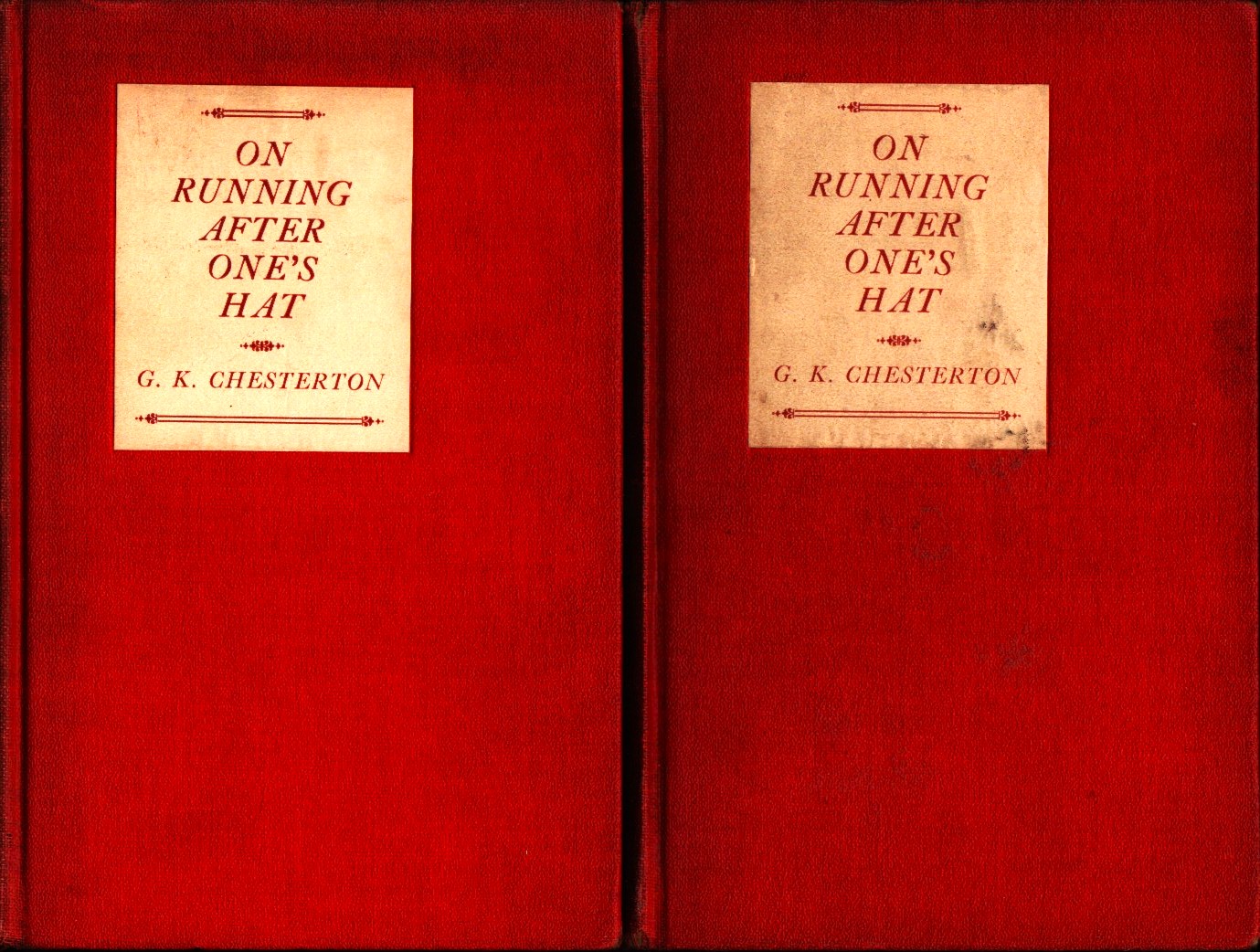
Gilbert Keith Chesterton is one of the giants of 20th century literature, a polymathic, larger-than-life figure whose being forgotten except for one minor corner of his works would have been incomprehensible a century ago.
Who am I to say he’s forgotten? The lead article on the site of the Society of G. K. Chesterton bears this title: “Who is this Guy and Why Haven’t I Heard of Him?” It continues with numbers that seem impossible, even by the standards of Irvin S. Cobb.
[L]let’s just come right out and say it: G.K. Chesterton was the best writer of the 20th century. He said something about everything and he said it better than anybody else. But he was no mere wordsmith. He was very good at expressing himself, but more importantly, he had something very good to express. The reason he was the greatest writer of the 20th century was because he was also the greatest thinker of the 20th century.
Born in London, G.K. Chesterton was educated at St. Paul’s, but never went to college. He went to art school. In 1900, he was asked to contribute a few magazine articles on art criticism, and went on to become one of the most prolific writers of all time. He wrote a hundred books, contributions to 200 more, hundreds of poems, including the epic Ballad of the White Horse, five plays, five novels, and some two hundred short stories, including a popular series featuring the priest-detective, Father Brown.
In spite of his literary accomplishments, he considered himself primarily a journalist. He wrote over 4,000 newspaper essays [5,000 on other pages on the site], including 30 years worth of weekly columns for the Illustrated London News, and 13 years of weekly columns for the Daily News. He also edited his own newspaper, G.K.’s Weekly.
Hard to imagine that this perpetual motion machine was still under the age of sixty when the Laugh Club volume appeared. For all this work, if anyone today is familiar with the name, outside of his work proselyting for Catholicism, the raison d’etre for the Society, it can only be because he created Father Brown. The priest detective who sees through seeming miracles is acclaimed as one of the seminal figures in the mystery genre and lives on through a seemingly endless British television series, along with millions of paperbacks. The humble priest is the existential opposite of Chesterton the man: he was “6’4″ and weighed about 300 pounds, usually had a cigar in his mouth, and walked around wearing a cape and a crumpled hat, tiny glasses pinched to the end of his nose, swordstick in hand, laughter blowing through his moustache.” Mystery buffs will recognize that description as an exact fit for John Dickson Carr’s Dr. Gideon Fell, another of the Golden Age’s great detectives who also saw through seemingly impossible crimes.
A Father Brown story from 1913, “The Mistake of the Machine,” appears in On Running After One’s Hat. (The title page adds the subtitle “and Other Whimsies,” which every reviewer used as an adjective to describe the essays.) Otherwise, the book is a “best-of” collection of essays selected by E. V. Knox, then the editor of the storied British humor magazine Punch. The title story dates from 1906, making it eligible for Humor by Vote, and in truth it has an old-fashioned whiff compared to the breezy style of, say, McCready Huston.
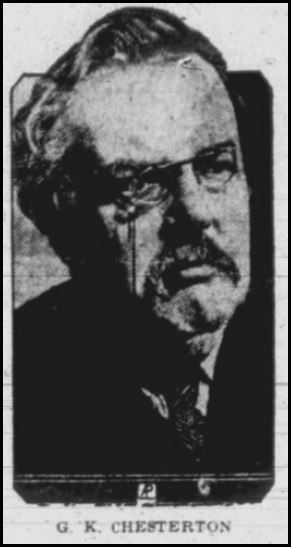
Reviewers were kind, although reading between the lines they thought the collection was rather slight but didn’t dare offend Chesterton fans. One such example appeared in Joseph Henry Jackson’s column in the December 2, 1933 San Francisco Chronicle.
“Good Chestertonians never, it appears, tire of reading Chesterton. At any rate, so the publishing house of McBride believes, for it has just reprinted in a small pocket-size edition that eminent essayist’s collection of whimsies, “On Running After One’s Hat.” You may remember the collection in a previous edition… This fresh reprint is priced at $1.
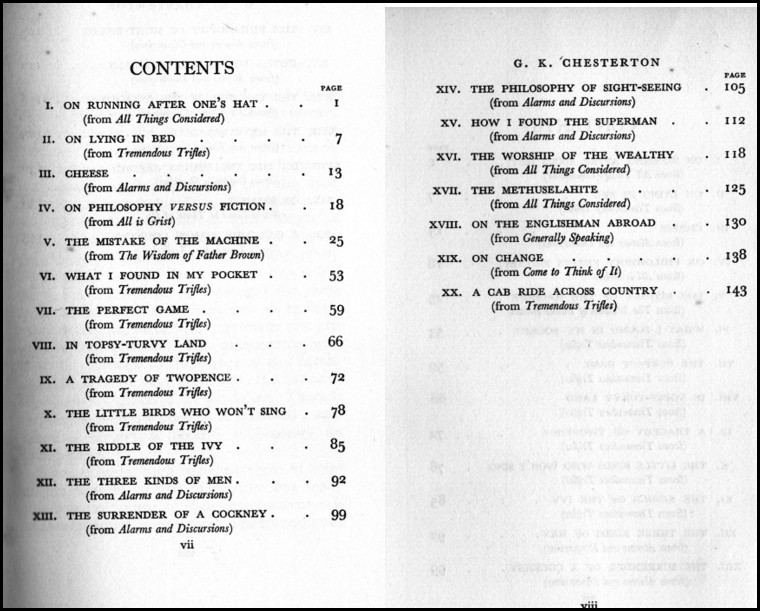
A previous UK edition? Makes sense. The collection has multiple entries whose treatment of American subjects is so ill-informed that reviewers singled them out. Why would they be selected for an American publication? I couldn’t find any British book of this name so I turned to Dale Ahlquist, president of the Society of Gilbert Keith Chesterton, for help. He located the original from earlier in 1933, Methuen’s Library of Humour: G. K. Chesterton, edited by E. V. Knox. Chesterton’s was the first volume in a twelve book series of compilations of works by famous British or associated humorists at that time, including Stephen Leacock, A. A. Milne, and P. G. Wodehouse, all edited by Knox. A definite success that went into three printing in 1933 alone after a November release, and a fourth in 1935. I would have had no way of knowing that this differently-titled work was the same one, so many thanks to Mr. Ahlquist for providing this critical information.
For Chesterton completists, here are the table of contents pages from the Methuen edition, giving the earlier collections that the pieces had been compiled in.
The Nuder Gender, by Joseph Hilton Smyth (1901-1972)
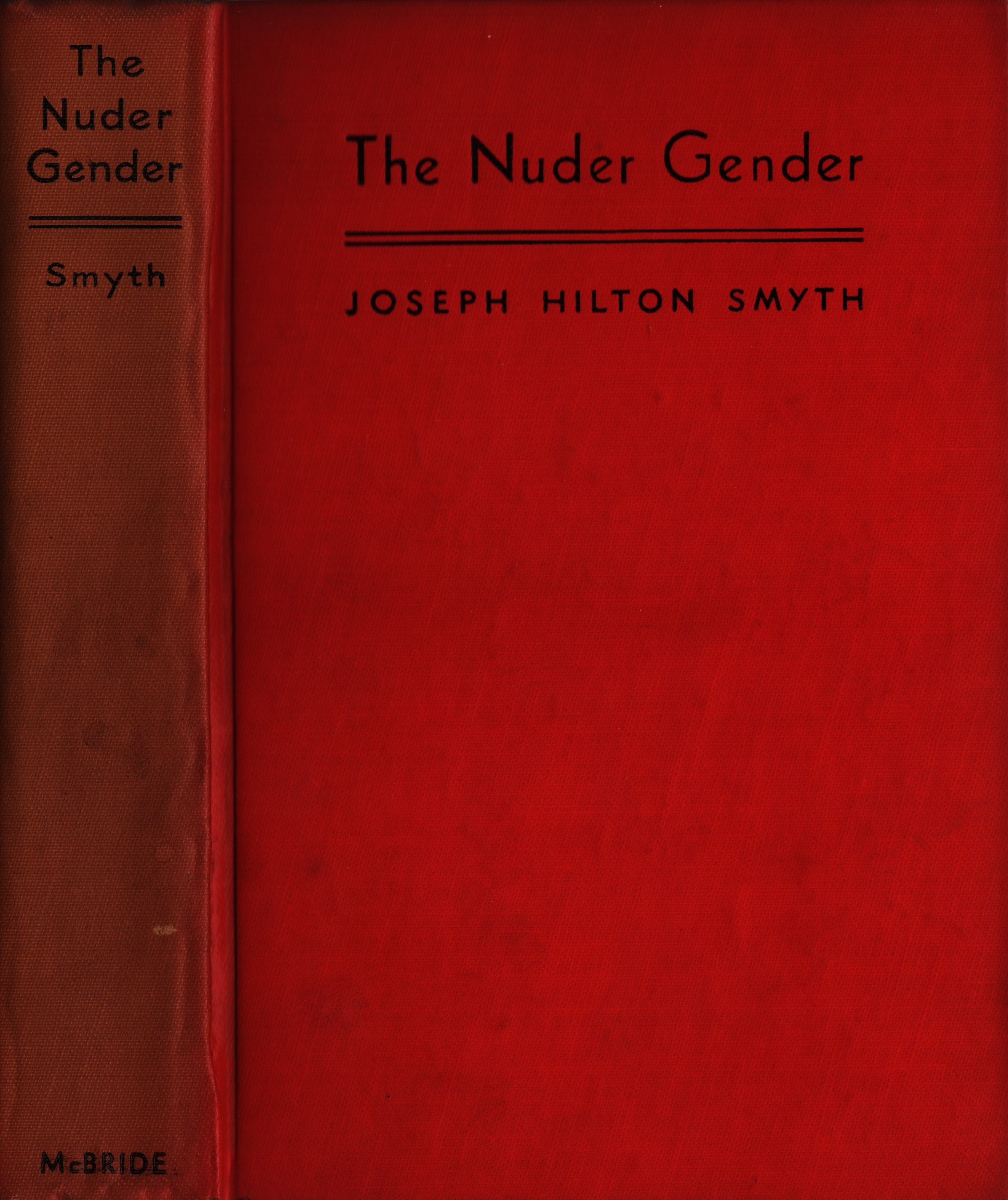
Nobody could condense a chapter into a sentence like the Time magazine of old, specifically April 17, 1939.
Last week another shake-up left The Saturday Review with the same editors but new owners. Purchaser was tall, hard-working Joseph Hilton Smyth, onetime pulp editor, conductor of a mimeographed sheet analyzing foreign affairs, who in the last year has taken over Current History and two venerable, distinguished magazines: Living Age (founded in 1844), North American Review (1815).
Apparently this distinguished member of the literati had grown substantially more serious over the decade. A search reveals his earlier short stories had such rollicking titles as “The Lost Degeneration,” “Girls Demand Excitement,” and “Leave It to Venus,” although only in the best publications. He probably sold his first novel with no more than a jam-packed sentence like the one used in this ad.
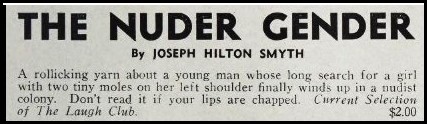
Nobody writes ad copy like “Don’t read it if your lips are chapped” anymore. The past is a foreign country.
The novel had just been serialized in College Humor magazine, where the impressionable youth of America responded with fervor. The Fresno Bee reported on February 4 that “Smyth’s fan mail on the novel is said to be the largest any story by College Humor has received.”
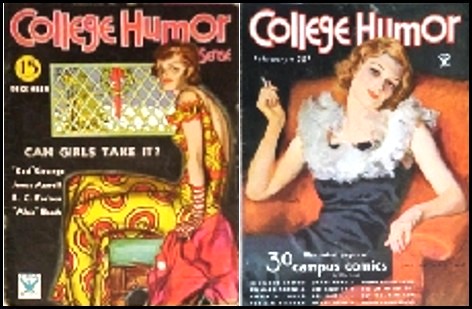
Little wonder that the novel, his first, had been snapped up by McBride. The airy hijinks among the younger set along with remarkably blithe metaphors reminded reviewers of P. G. Wodehouse, but the sexless Wodehouse boys had no resemblance to the characters. I think they’re closer to those of fellow McBride author Thorne Smith, who had featured a nudist colony only a couple of years earlier.
Travel magazine regularly ran advertisements for McBride releases, no coincidence since Robert McBride also owned and ran the magazine. The ads are often the only evidence I have for a book having a Laugh Club edition. I haven’t been able to find a Laugh Club printing of The Nuder Gender anywhere on the internet, or an image of the dust jacket.
Only a vintage Time editor could squeeze Smyth’s career after 1939 into less than a master’s thesis. Very briefly: the money for the magazine purchases came from Japanese sources and Smyth served seven years in federal prison for being an unregistered Japanese agent. He revived his writing career after his release, mostly under pseudonyms, with lurid “sleaze” and crime novels as 1950s sexless as 1933 humor but with similar clickbait titles, along with putatively nonfictional accounts like The Sex Probers and Sex Life of the American Prostitute. Crime doesn’t pay, kids.
Oh! Definitely, by Maurice Lincoln (1888?-1962)
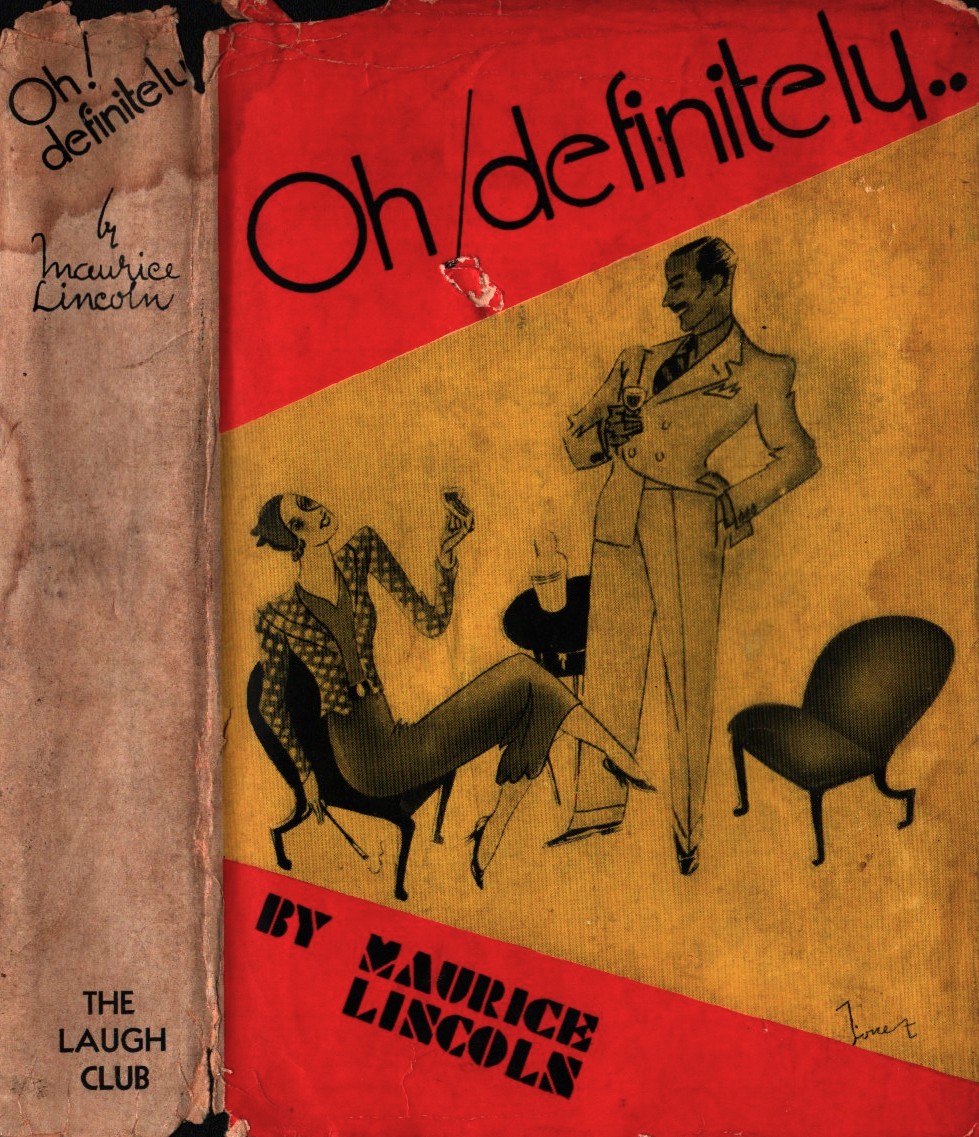
How do words or phrases enter the language? Many times they emerge out of seeming nowhere or everywhere and all linguists can do is try to track down earlier and earlier uses. “The whole nine yards” is an example. A few words are coined and speakers find them so apt and useful that they immediately are on every lip. Karel Čapek’s “robot” tops that list.
Then there’s “oh, definitely”. As an affirmative, it’s similar to “absolutely” or “yes, indeed” and had been in use in Britain for years. Such is the power of fiction that the old and dull becomes vibrantly alive. “A new phrase is going around in England that may catch on in America,” said the Kansas City Star. English curmudgeons pounced on it as an example of the awful modern language spouted by their children.
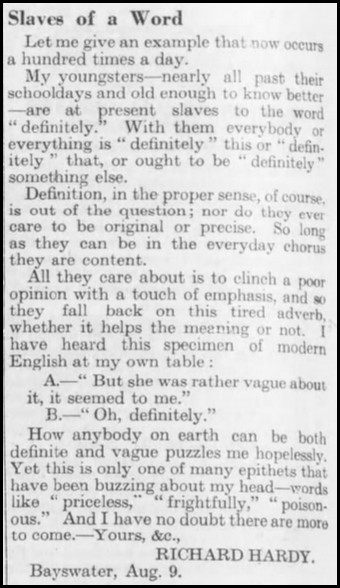
Who was to blame for this scourge on proper English? Esmond Condy, that’s who. Esmond Condy, one of the most English names of all time, used the pseudonym Maurice Lincoln for all his novels, including two early science fiction works. Not much is known about him. Various sources give his birthdate as 1887, 1888, and 1889. Even those professing to correct earlier mistaken dates can’t agree on which is correct.
Twenty-two-year-old sex bomb Ursula, who has no brains but makes up for that by being an unmitigated little liar, has a vocabulary supposedly limited to “marvelous” and “definitely,” delivered in the most adorable speaking voice. Horace is her besotted 40-year-old lover. Not much more is needed in a farce, yet Lincoln throws Horace’s cousin in the mix, a dipsomaniacal ex-prizefighter baronet who may or may not have an illegitimate offspring. Instant bestseller. Whether the book was a wonderful spoof of the Bright Young Things of Britain or just plain stupid remains as undetermined as Condy’s birthday, as English and American reviewers had wildly different views of the contents.
Bluebells, by E. V. Knox (1881-1971)
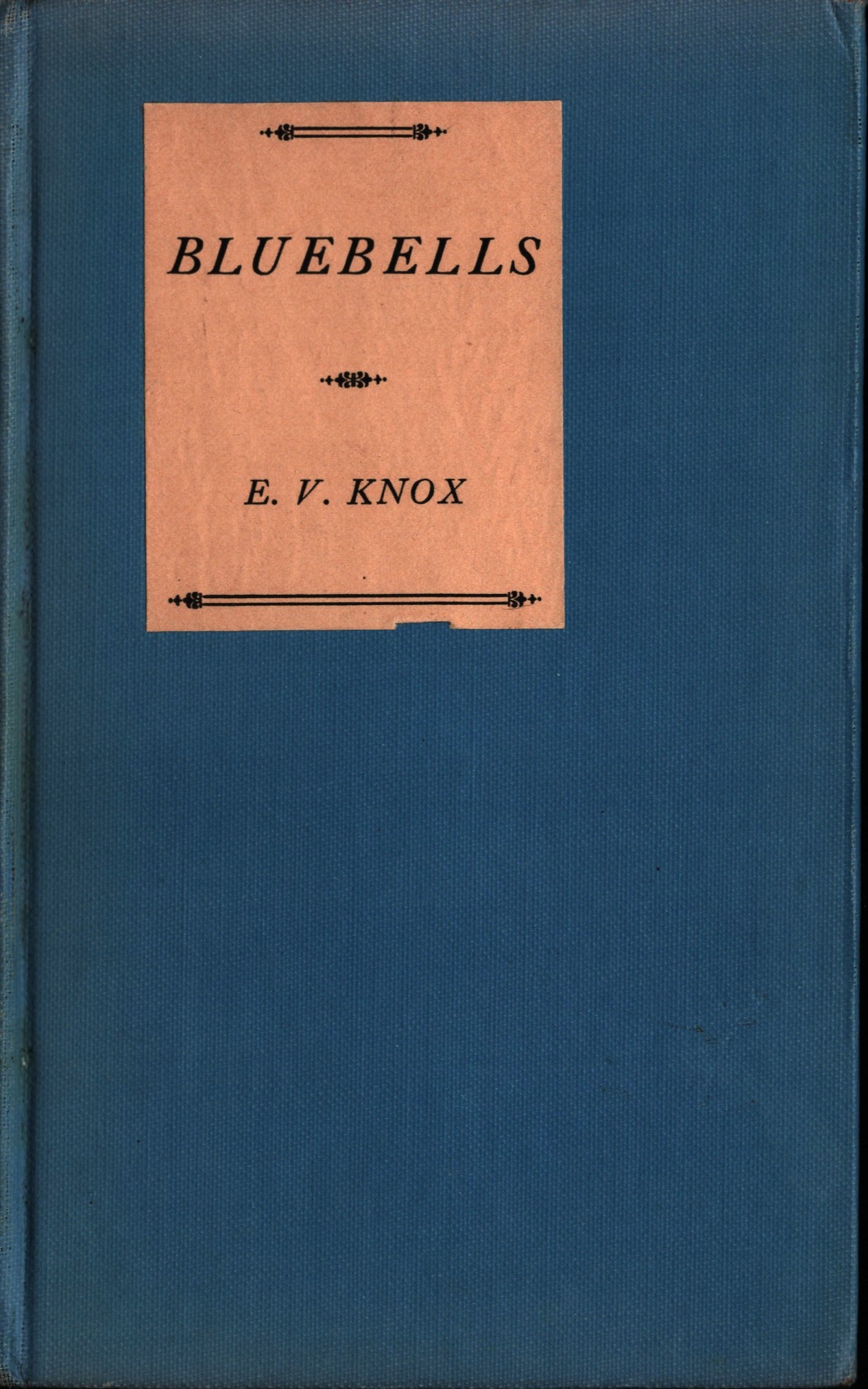
Edmund George Valpy Knox, known to readers as Evoe, is the same E. V. Knox who edited the twelve-volume Methuen’s Library of Humor mentioned above for the Chesterton collection that McBride reprinted. McBride must have loved the series: he also reprinted the volume on Canadian superstar Stephen Leacock, retitling it The Perfect Salesman. Knox was not as humble and self-effacing as the British stereotype. He recognized himself as one of the twelve leading humorists in the British world and included a collection of his own works, here published as Bluebells.
Not as well known in America as Chesterton or Leacock, Knox may have been the leading figure in British humor in 1934. A satirist famed for point-perfect parodies of poetry and prose, he had amassed around twenty collections of his short pieces, much of it appearing in the venerable humor magazine Punch. (Bluebells reprints pieces from ten earlier collections.) When Sir Owen Seaman retired as editor of Punch in 1932, he “‘yield[ed] the motley of national jester” to Knox, said the New York Times. Methuen used that all-but-official imprimatur to give authority to the Library of Humor, the best selected by the best.
The Times also quoted his views on British versus American humor.
Understatement is certainly the most characteristic ingredient of English humor. Irony, in other words. Innuendo and veiled suggestion are related devices. American humor is quite the opposite. It is apt to be characterized by exaggeration, by the suppression of some link in the chain of argument or narrative, and by a great wealth of simile and metaphor.
The reviewer in the St. Louis Post-Dispatch seemed to agree.
The wit is not the sort that elicits the guffaw, nor is the humor likely to provoke a chuckle. Both are of the quiet sort that leaves much to the sympathetic reader and produces a steady glow of quiet amusement. It is a lovable little book.
Americans were perhaps not sympathetic. Bluebells is the scarcest book on this page today. There appears to have been exactly one copy available on the internet in June 2026, and I bought it. No hint of a dust jacket to be found. Nor is there any trace of a Laugh Club edition except for the inevitable ad in Travel bolstered by an identical ad in the June 1934 issue of the prestigious Atlantic Monthly magazine calling it the “Current Selection of the Laugh Club.” I have to take their word for it.
Hunting the Wow, by Ellis Parker Butler (1869-1937); illustrated by Thomas J. Fogarty
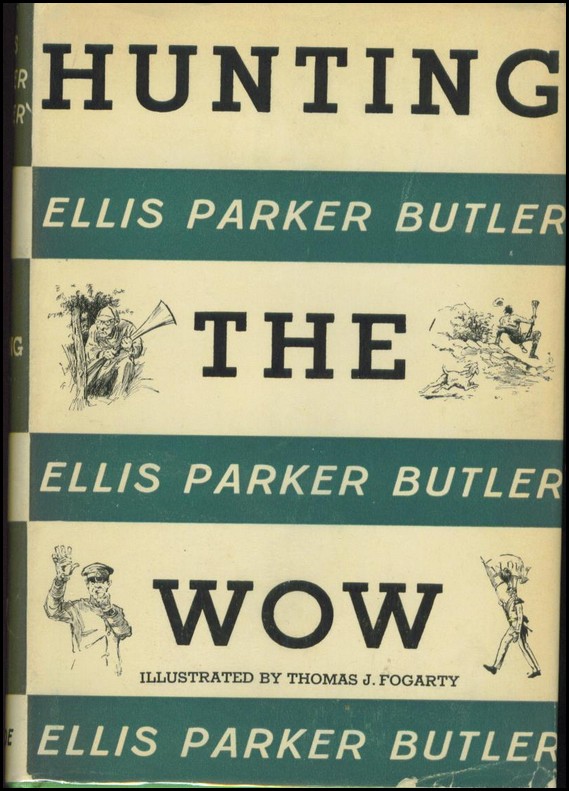
Yet another of the cohort of midwestern humorists that flourished in the early 20th century, Butler hailed from Muscatine, IA, always a source of inspiration for homey, dialect-driven stories of small-town life. Never mind that he moved to wicked New York after he married in 1899. Something about the bright lights inspired these pieces mocking modern neuroses, so popular with contemporary city humorists. We’re back at 1930s slang. “Wow” is the opposite of a flop, a hit, a success, the center of attention and a wonder to behold. Odd that the paean is coming from a man in his sixties, the second oldest author on the list. Humorists, of course, have to be sensitive to the times; what a coup to be on top of the latest fad term. Or did he wow a bit too much?
America today is Wow conscious. … Cleopatra was something of a Wow back in the days before radio, and the “Marseillaise” “went over big” with the French Revolution crowd, but it was a long time between Wows in those old days. If America does not have a Wow per day we feel as if we were being given a very raw deal. …
The girls want to be Wows, and the boys want to be Wows, and – this is confidential – I would not mind if this book was a Wow.
Butler had plenty of Wow days in his life. Like Cobb and Chesterton, he churned out prose and poetry at a ridiculous rate. Sources can’t decide whether he wrote at least 2,000 short stories or at least 2,000 pieces of all kinds. Either way, that’s more than a piece per week for over thirty years. Absurdly, he didn’t trust the income from this flood of fiction enough to quit his day job, which just as absurdly was that of a bank president.
His greatest hit, the one that no mention of him could be complete without, was a short story called “Pigs Is Pigs,” published in the September 1905 American Illustrated Magazine and reprinted twice before the year ended. Multiple anthologists followed their lead, despite the piece having previously been magnified by large type into a “novel” of 34 pages, selling more zillions. Disney cartoonified it in 1954, and got an Oscar nomination for Best Short Film. Butler was the only Laugh Club author to be reprinted in Humor By Vote, although Chic Sale selected a different story over one which may have been all too well known by then.
And though you might be tired of my telling you that the critics raved, what else would you call this anonymous review in the November 2, 1934 Tampa Times?
There are ten thousand hearty chuckles in the 205 pages of “Hunting the Wow.” It is more than an ordinary book, more indeed than an extraordinary book. It’s a WOW.
Chuckle hunters will find in the Land of Wow the drollest lines of type to emerge from an author’s pen in years. If old Aesop were alive today he would quickly expire of envy after perusing the chapter entitled “The Fable of the Fox and the Cream.”
At any rate take a tip and read this mirthful account of “Hunting the Wow.” It’s great.
Fan Mail, by Lowell Thomas (1892-1981), illustrated by O. Soglow
Lowell Thomas worked his way through high school and didn’t graduate until he was 19. Not wasting any more time, he received a B.Sc. the next year. And another bachelor’s plus a master’s degree the next year. Probably without realizing how it would shape the rest of his life, he next taught oratory at the Chicago-Kent College of Law. At 24 he added an additional M.A. from Princeton in History and Politics, although he taught oratory again to make tuition. He never stopped moving after that.
While just a single M.A. he went to Alaska with a movie camera and brought back a travelogue, helping to start a genre that would make him world famous. He met T. S. Lawrence while covering the desert war against the Ottoman Empire, and filmed him in Arabian outfits against a then-exotic background. Thomas’ postwar lectures and films helped make Lawrence of Arabia – an epithet he coined – an iconic figure, boosted by Thomas’ first book, With Lawrence in Arabia in 1924. For the next decade about two travel or history books a year kept his name constantly in the newspapers.
All that oratorical understanding made him more than just a skilled lecturer. He recognized that the sheer power of voice could overwhelm words, with or without the additional impetus of pictures. A stream of travel movie shorts were made at Paramount starting in 1930, which he reinforced with a 15-minute travel show on CBS radio. Radio travel was less successful than movies, so the show quickly transformed into a nightly news program, the first, so successful that NBC poached him two years later, and he made good by regularly garnering a top twenty rating. Everybody tuned in to Thomas’ voice until he ended the show with “So long until tomorrow,” a sign-off tic that inflicts broadcasters until the present day.
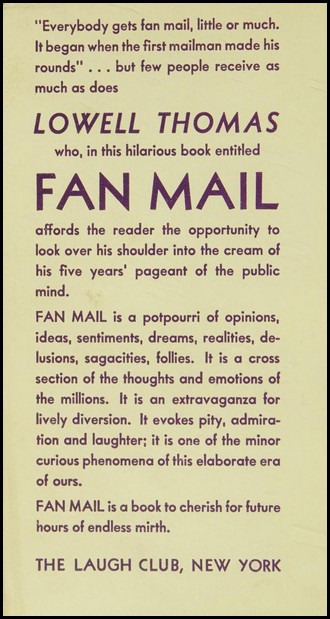
The radio show drew an incredible response, sometimes receiving more than 50,000 fan letters a week. Thomas – or probably some staffer – collected the odd and funny ones for an aptly and concisely titled book. An entire chapter is devoted to complaints that the master orator mispronounced words. McBride published it at his Dodge imprint, but reprinted it for the Laugh Club, where it fits into an otherwise inexplicable bimonthly hole in 1934. No copy with a Laugh Club imprint seems to exist, but gutenberg.org has a scan of it, whence the front flap above comes from.
Old Bill Looks at Europe, by Bruce Bairnsfather (1887-1959); illustrated by the author
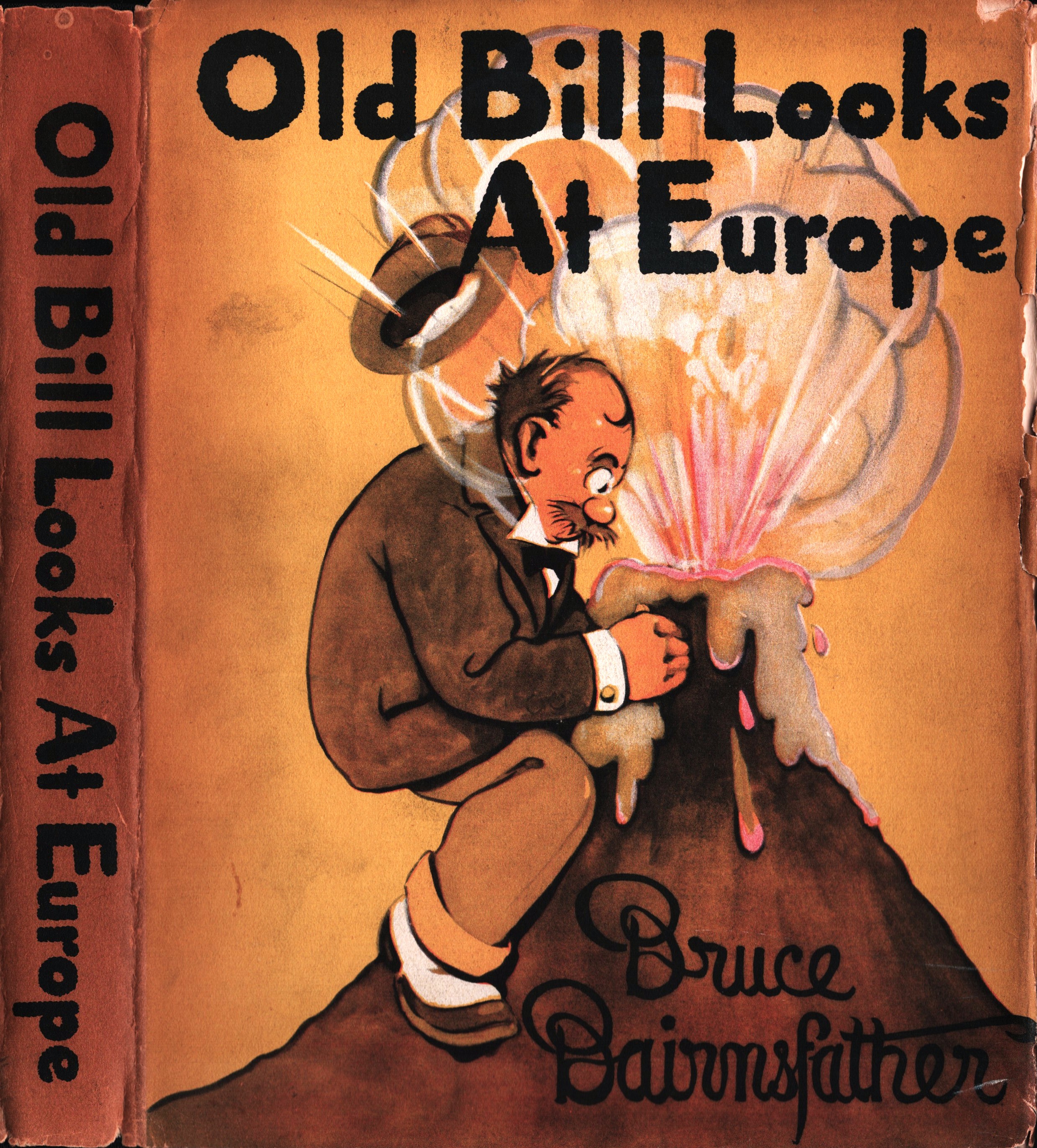
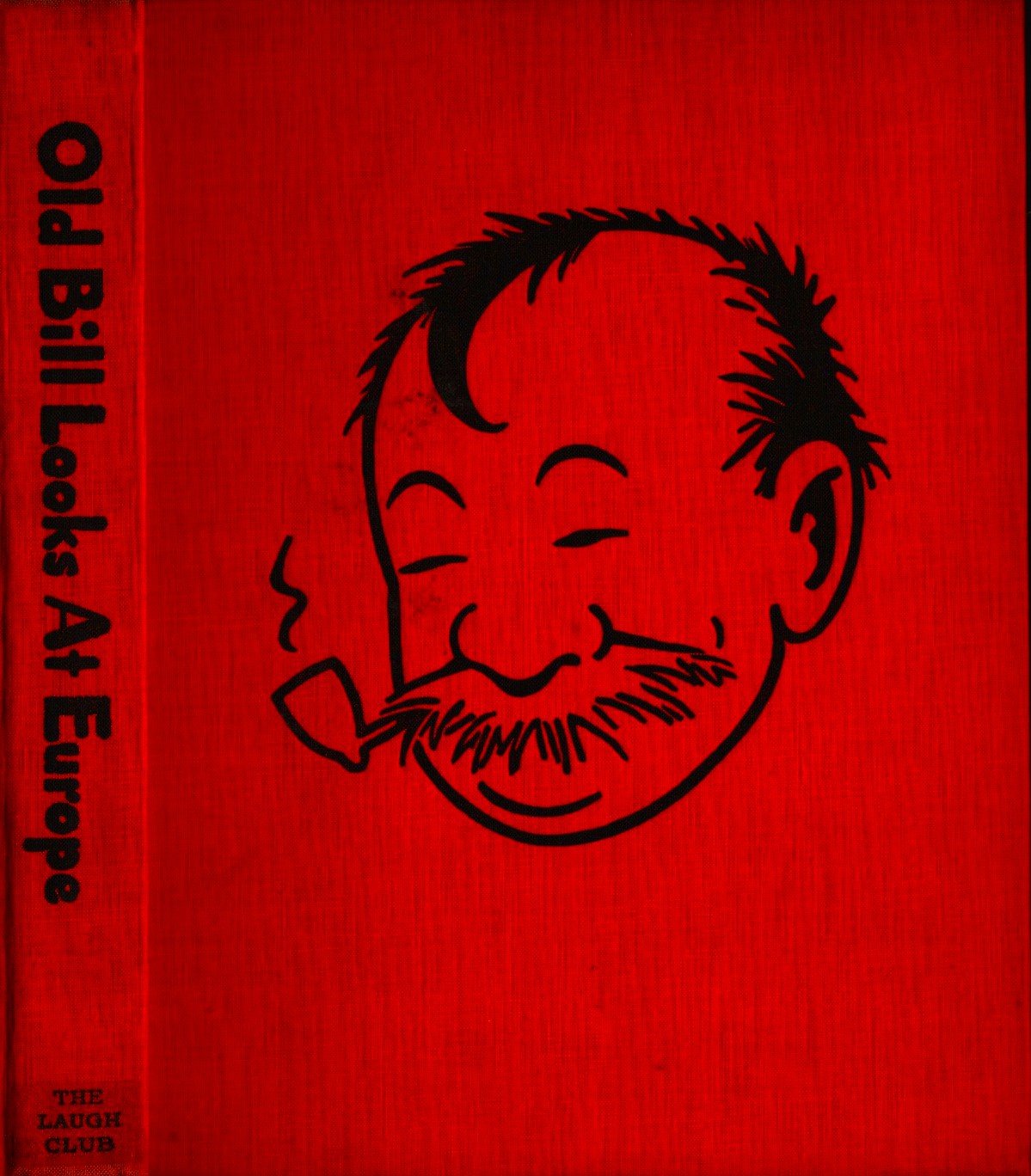
Bruce Bairnsfather held a place in the British pantheon of humor near to that of Harry Lauder. Unknown as an artist or cartoonist or humorist until he was put into service in a British machine gun unit during the Great War. Darkly sardonic cartoons about life in the trenches began appearing in the satirical magazine The Bystander. By then Bairnsfather had been promoted to Captain but his sympathies clearly were geared to the life of the ordinary Tommy living in the trenches, providing a view of everyday life in the war prefiguring that of the American Bill Mauldin during WWII.

Walrus-mustachioed “Old Bill” emerged during a series of 1916 cartoons later published as Fragments from France and quickly became Bainsfather’s signature character, older, toughened, and a miracle of endurance despite the entire world seemingly against him. More books, revues, comic strips, and an endless variety of merch would follow, somewhat to Bairnsfather’s dismay as he never could crawl out of his creation’s shadow.

The original American edition of this book was issued from the Dodge Publishing Company. McBride took over the failing company in 1928 and used it for a limited number of books.
By all logic, eighteen Laugh Club titles should exist. Some independent mentions of it after 1934 should exist. Forgotten shouldn’t mean disappeared from all historical records. If mentions ever get uprooted from some newly-assembled or overlooked database I promise to add them. The Laugh Club deserves it.
July 9, 2026


You must be logged in to post a comment.