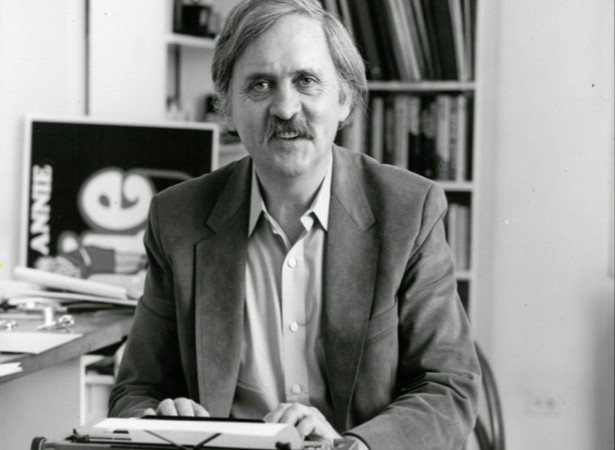
Thomas Meehan is probably the most famous forgotten humorist of modern times. A lot of work had to be done to earn that appellation and Meehan spent 40 years wiping out the memory of his one book of humor. Don’t feel sorry; he laughed all the way to the bank.
Born in Ossining, NY, he went to tony Hamilton College where he majored in English, got introduced to good literature, and learned that he couldn’t write like Faulkner but had a talent for humor. That probably did him little good when he graduated in 1951 and went straight into the Army. He made it out the other side and got a prize – a job at The New Yorker. His first credit was a Talk of the Town casual in 1958. A year later, though, his name appeared over the first of two dozen humor pieces.
Meehan was an excellent parodist, probably the best that The New Yorker produced since Wolcott Gibbs. That’s a bit unfortunate today; few things date quicker than contemporary parody. Saul Bellow, Graham Greene, and Jacqueline Susann simply aren’t read by enough people today to get the joke. (I wouldn’t want to bet on which is most read, though.)
Yet in 1962, the February 24 anniversary issue to be exact, Meehan produced what the stodgy magazine insisted on calling a “fiction,” based on spotting an odd and normally meaningless connection about names in the public conversation. As is done with the best humor, he turned a bit of nothing into art, a timeless piece still readable without today’s audience being able to put a face to any of the names.
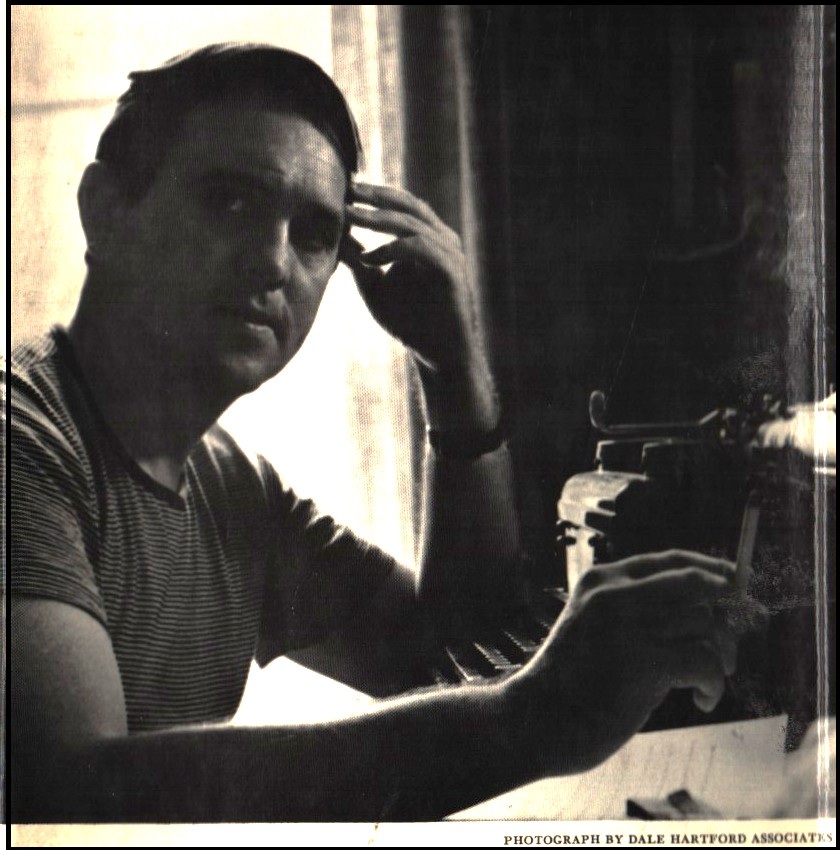
“Yma Dream” relies not on witty lines capable of being lifted from context, but is rather like a bolero, in which the music builds on and complicates a riff to crescendo at a crashing finale.
In this dream, like so many real life ones, the opening is simple yet totally unlikely. Meehan, a nobody writer living in a small Greenwich Village apartment, throws a cocktail party for unknown guests. The first to arrive is Peruvian singer Yma Sumac. She is followed by actress Ava Gardner. Meehan introduces them. “Ava, Yma.” Then the deluge. They are followed by Israeli Foreign Minister Abba Eban; Oona O’Neil, the wife of Charlie Chaplin; and Italian playwright Ugo Betti. Actresses Ona Munson and Ida Lupino show up together; Abba Eban glares at the playboy Aga Khan; novelists Ira Wolfert and Ilya Ehrenberg bookend one another; actress Eva Gabor swans in; and actress Uta Hagen completes the crowd overwhelming Meehan’s tiny living room. As each is laboriously introduced, the mood crackles as the apparent mockery darkens the event.
“O.K., O.K.,” I snap crossly. “Uta, Yma; Uta, Ava; Uta, Oona; Uta, Ona; Uta, Ida; Uta, Ugo; Uta, Abba; Uta, Ilya; Uta, Ira; Uta, Aga; Uta, Eva.”
But there is yet one more guest.
Standing before me, in immaculate evening dress, is a sturdy, distinguished-looking man. He is the Polish concert pianist Mieczyslaw Horszowski.
“Come in, Mieczyslaw!” I cry, with tears in my eyes. “I’ve never before been so glad to see anyone in my whole life!”
The musical choice of the names and their progression shows a master’s touch, as does the punchline. Meehan’s name, the unremarkable Tom, became fixed to the piece, and it spawned the title of his one collection of humor, Yma, Ava; Yma, Abba; Yma, Oona; Yma, Ida; Yma, Aga … and Others, published in 1967. Note that the title cleverly hints at the joke, but doesn’t spoil the ending.
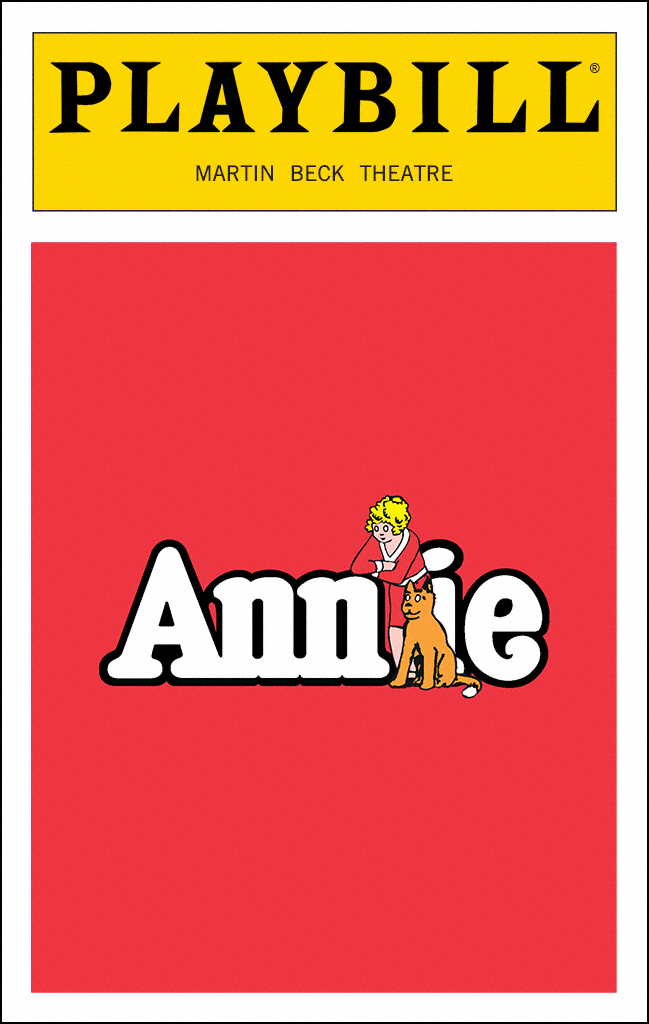
Meehan continued to write for The New Yorker for a few more years but he had to give that up. He was making too much money. In 1972 he was asked to write the book for a Broadway project as improbable as his Yma Dream, a musical based on the Little Orphan Annie comic strip. Getting that to work took an interminable five years. Work it did: Annie ran on Broadway for five years, 2377 performances.
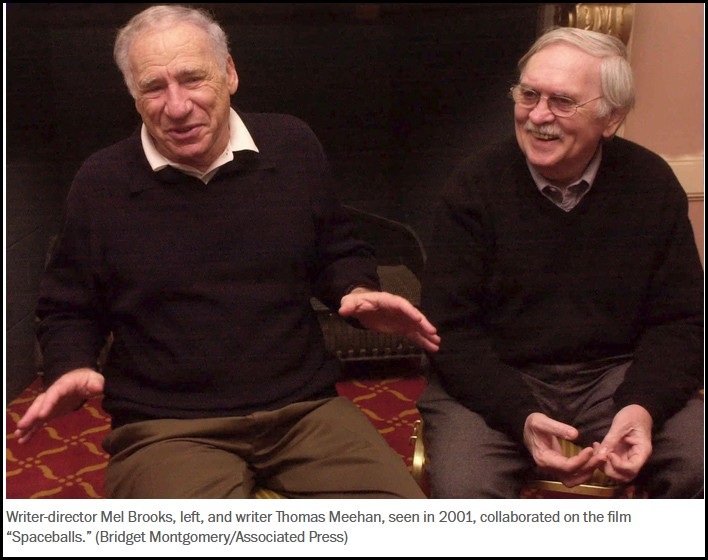
Meehan also collaborated on the book of the musical version of The Producers with Mel Brooks, which ran for six years, 2502 performances, and Young Frankenstein, a relative dud that still ran for more than a year. While The Producers was smashing records, Meehan collaborated on the book for the musical Hairspray, the longest-lasting at 2642 performances.
He’s the only writer who’s credited with the book for three plays that ran for over 2000 performances. Moreover, he won Tony Awards for each of them.
Want more? He also collaborated with Brooks and Ronnie Graham on the remake of the Jack Benny movie To Be and Not To Be and a little thing called Spaceballs.
Every time any of these gets a revival or a remake or a sequel or a derivative project additional money pours in. He’s done a ton of flops, too, to be sure. Anybody remember the musical versions of Elf or Rocky or Chaplin or Cry-Baby? Good thing the writer gets paid up front.
Meehan’s works have been seen by tens of millions over the past half-century. I’d be surprised if he weren’t the richest forgotten humorist of them all. He wasn’t forgotten by the right people – anyone who has Mel Brooks continually calling to collaborate is known by everybody in show business – and I’m sure his accountant thought of him constantly. But he’s the “and” in the credits that few on the outside remember. Nevertheless, most pictures show him broadly smiling. No need to wonder why.
Bibliography of Humorous Works
- 1957 – Yma, Ava; Yma, Abba; Yma, Oona; Yma, Ida; Yma, Aga… and Others


 Great Forgotten Humorists
You must be logged in to post a comment.