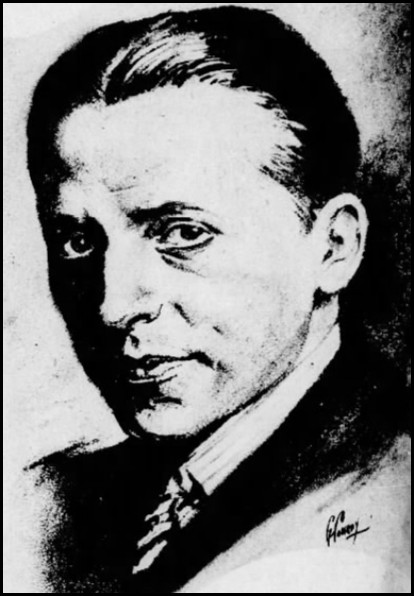
Ralph Emerson Waldo Barton (1891-1931) led the life many people today associate with the Roaring 20s. And had an ending many people today would associate with the dismal turn of the 30s.
Supremely talented in art from a youngster, he dropped out of high school in Kansas City to pursue that career, quickly found a job on newspapers, and soon expanded past his mid-American home, selling humorous art to New York City magazines. He and his first wife moved there before WWI.
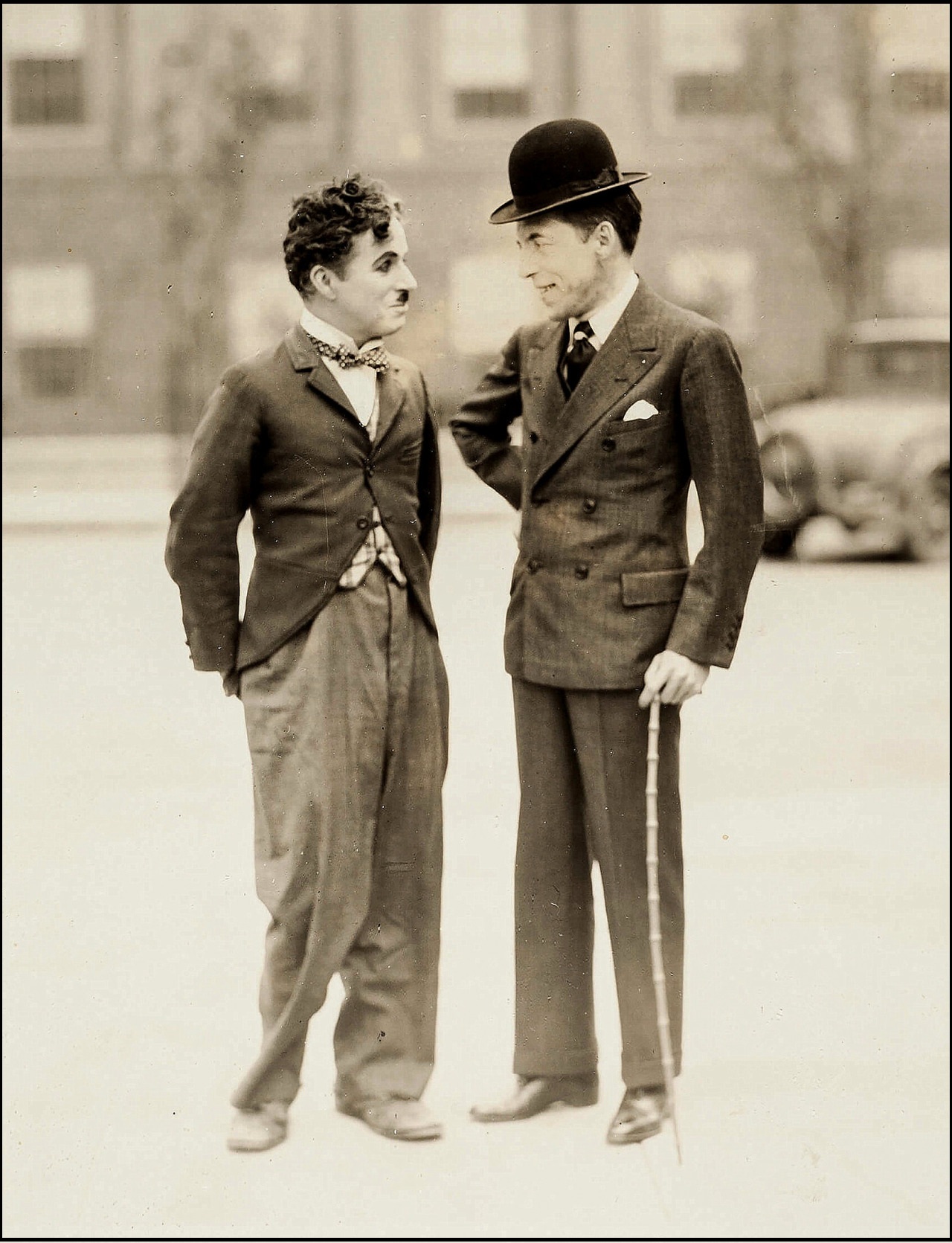
All manner of humorous art flowed from his pen: single-panel cartoons, full-page storyboards, and dazzling representations of cafe society. A young habitue of the New Young showbiz and media worlds that dominated attention, Barton caricatured virtually every famous person of the era, and would become friends with seemingly every one of them.
Barton’s career as an artist was so vast and he was so prolific that it’s tempting to fill up this page with art and neglect the point, which is his one book. So I’ll compromise with the February 21, 1925 cover of the humor magazine Judge. The editor turned the “Theatrical Number” over to the leading comic stars of Broadway, all of whom were caricatured on this magnificent collective, even those who didn’t write anything for it.
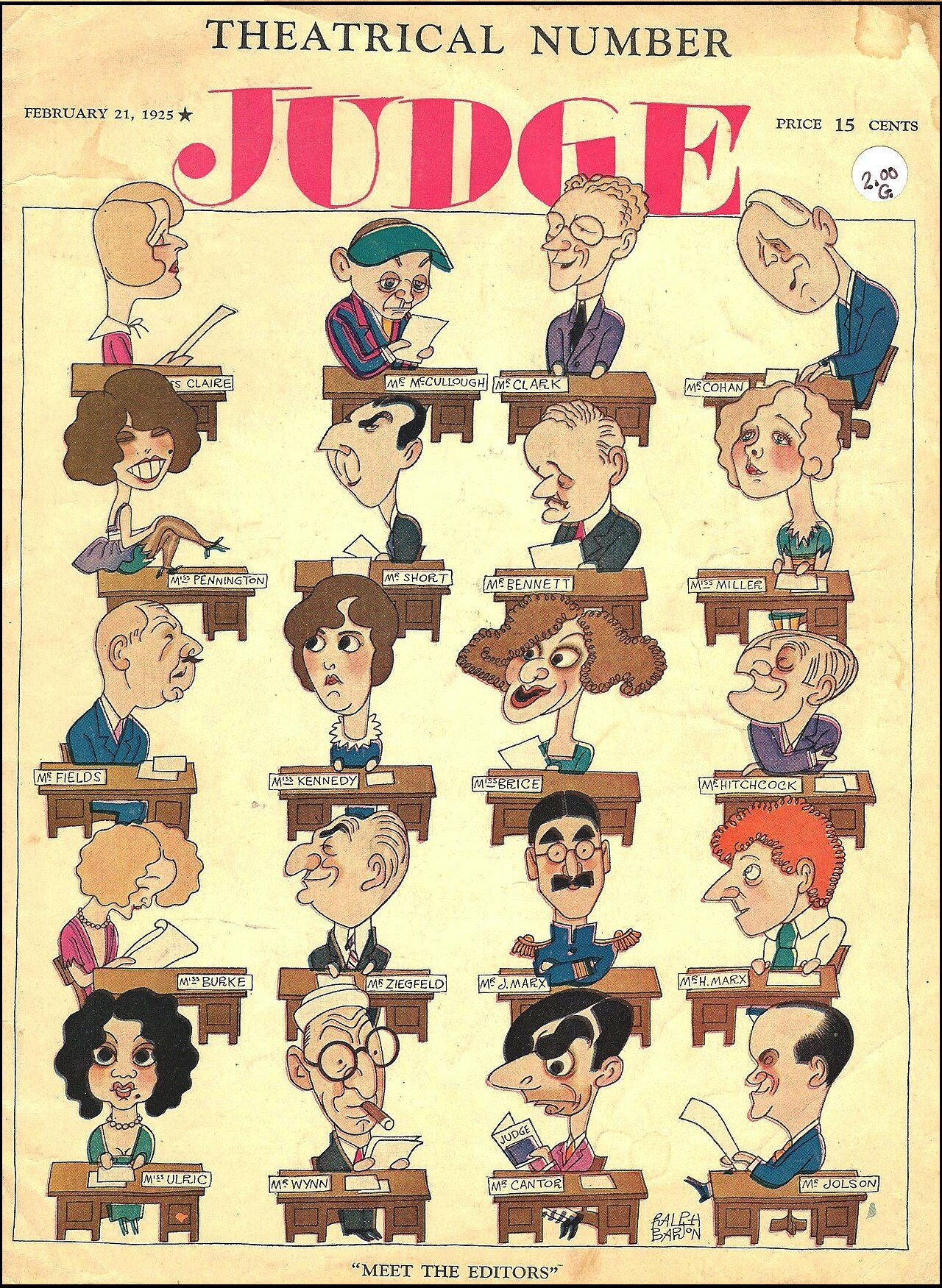
Note the nameplates of Mr. J. Marx and Mr. H. Marx. Why Groucho was still dubbed J. for his given name of Julius but Adolph was already H. for Harpo is a mystery. This issue is also notable because it contains the first humor piece written by the future Groucho.
I only vaguely remembered Barton as a leading artist, but his bio instantly brought to mind books already in my collection. I have early editions of Anita Loos’ all-time classic novel, Gentlemen Prefer Blondes, and the anthology containing a number of rollicking attacks on Prohibition, Nonsenseorship, both featuring many superb illustrations by him.
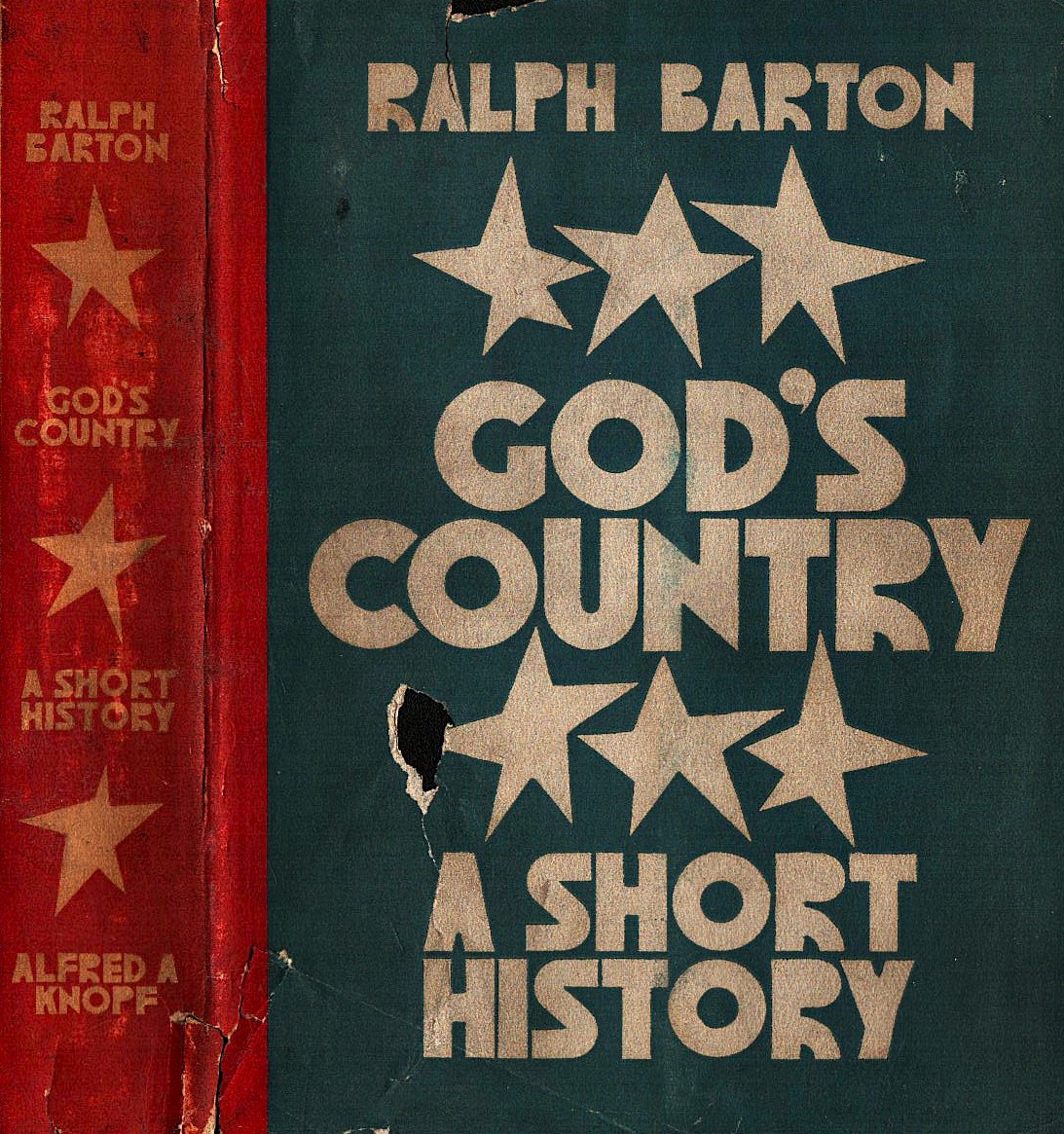
It wasn’t until 1929 that he took his talent for sardonic captioning to book length. God’s Country is the anti-American history textbook, instantly on the banned list if published today, an undoing of famous names, presidents, Prohibition, and general idiocy in probably the most savage contemporary attack on the failures of our country outside of H. L. Mencken.
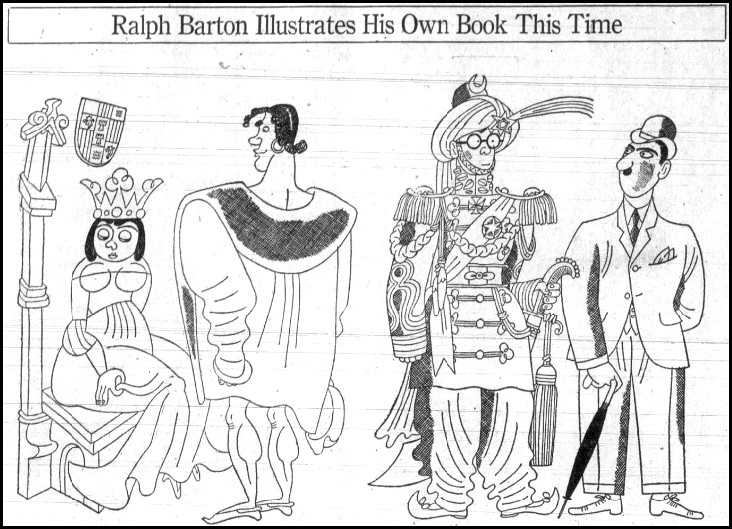
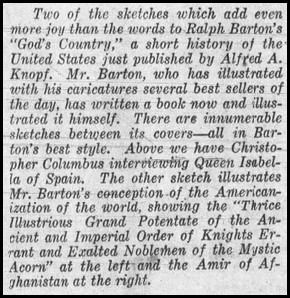
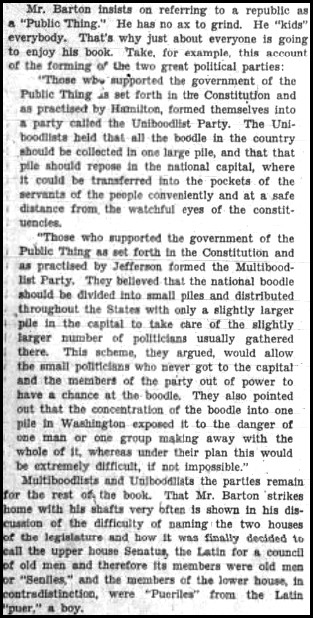
The same paper, in this very long adulation of the book, provides a good example of Barton’s rendition of political history.
Yet the best and most flattering review appeared in a British newspaper, the September 14, 1929, Cheltenham Chronicle and Gloucestershire Graphic.
So far as brilliant, if violent, satire can lay bear the soul of a nation, that has been done in this book. The author is daring without limit – his pen is a scourge which flogs mercilessly the liberty and equality of the New World from its beginnings, and mocks its institutions, from slavery to jazz bands. It is all excellent reading, even if one is occasionally embarrassed by its naked forthrightness – and it ought to be very popular…
Barton, thoroughly fed up with the inanities of American society, God’s Country as he mockingly called it, fled the country for Paris shortly after the book was published. There he stayed for but a moment, just long enough it seems to divorce his French fourth wife. Barton’s bitter tone may have been stimulated by his heartbreaking divorce from his third wife, Carlotta Monterey, who in 1929 was forever lost to him when she married playwright Eugene O’Neill. Depressed and fearing insanity – he is now thought to have had bipolar disease – he shot himself in 1931, shortly before his fortieth birthday.
Forgotten with the rest of the butterflies flitting around the Jazz Age, Barton’s reputation as an artist rebounded from its 30s nadir to a high point today, if the prices of his caricatures at auction is any indication. But God’s Country remains an amazing piece of forgotten patriotic blasphemy.
Bibliography of Humorous Works
- 1929 – God’s Country (illustrated by Ralph Barton)


 Great Forgotten Humorists
You must be logged in to post a comment.