
Jean Marcel Bruller was a a graphic artist, draftsman, and engraver who trained at the École Alsacienne, which encouraged him to illustrate his own writings as well as others, doing so at times with a sardonically comical flair.
Eccentric even by the very high standards of French artists, Bruller was a prankster already known for his morbid jokes about death. A favorite included the sick humor of calling a friend to announce his forthcoming suicide only to walk in on them a few minutes with “Fooled ya!” Much more creatively, he annually celebrated Valentine’s Day by hiring a horse-drawn wagon to carry him in a casket through the streets of Paris under the sign “I am dead! You ought to be!”
His humor, emerging from Dada or the Surrealists, spoke against the absurdity and evil of a world that produced WWI, when life itself appeared cheap and meaningless. Combining words and art, his first book, published as a limited edition on Chesterfield laid paper (i.e. the good stuff) in 1926, Vingt et Une Recittes pratiques de mort violent (21 Practical Images for Violent Death), was a mordant how-to guide intended to remedy the “danger of inexpert handling by the amateur” attempting suicide.
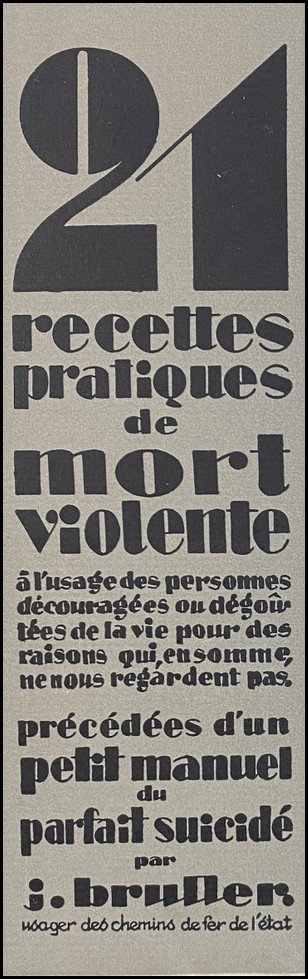
The subtitle was translated for the American edition as “for the Use of People Discouraged or Disgusted with Life for Reasons Which, All Things Considered, Are None of Our Business”.”
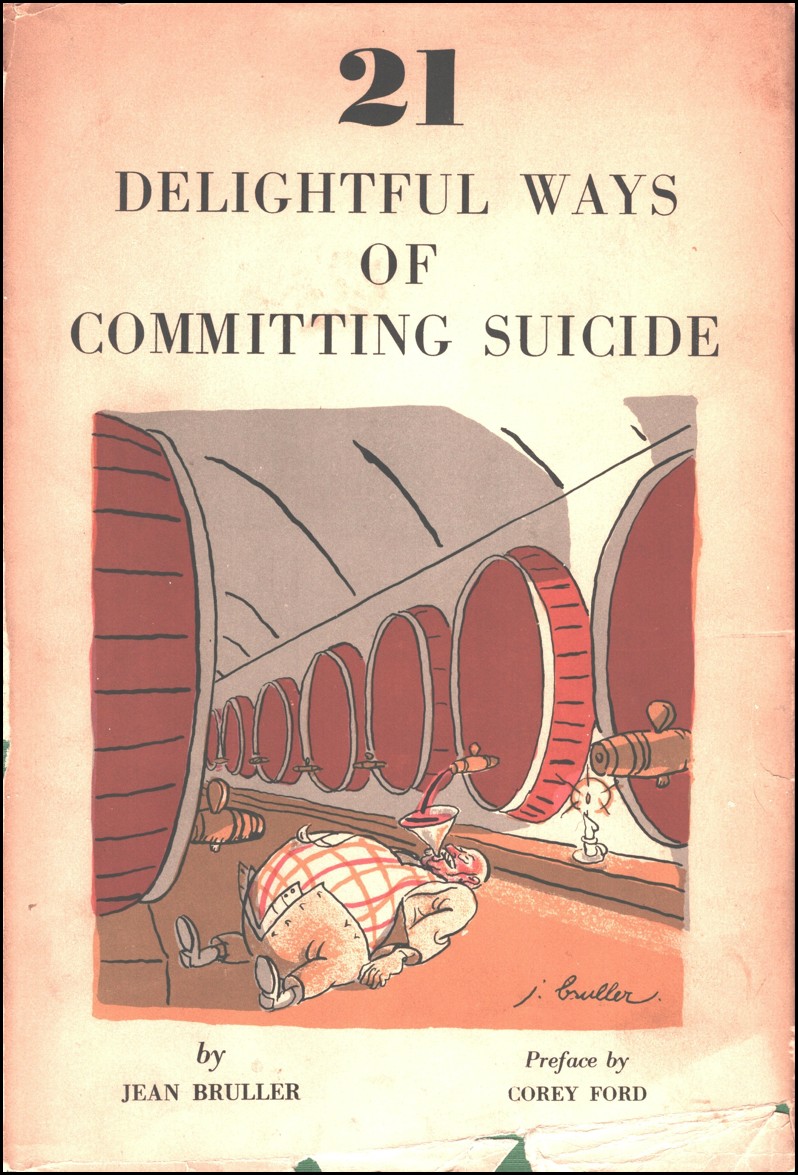
Four years later, shorter after the start of the Great Depression when talk of bankers jumping from high windows made suicide fashionable dinner conversation, the book was (anonymously) translated and reprinted in the U.S. as 21 Delightful Ways of Committing Suicide. A rather silly preface by humorist Corey Ford was appended. The copyright page states it was reprinted from Vanity Fair magazine, but I haven’t been able to find an original date. Covici, Friede, the American publisher, paid homage to Bruller’s prank life – and to the previous year’s St. Valentine Day Massacre by Capone’s mob in Chicago – by wrapping the book in a gift band reading “To my valentine.”
Although there was a reference to American Prohibition in method 16…
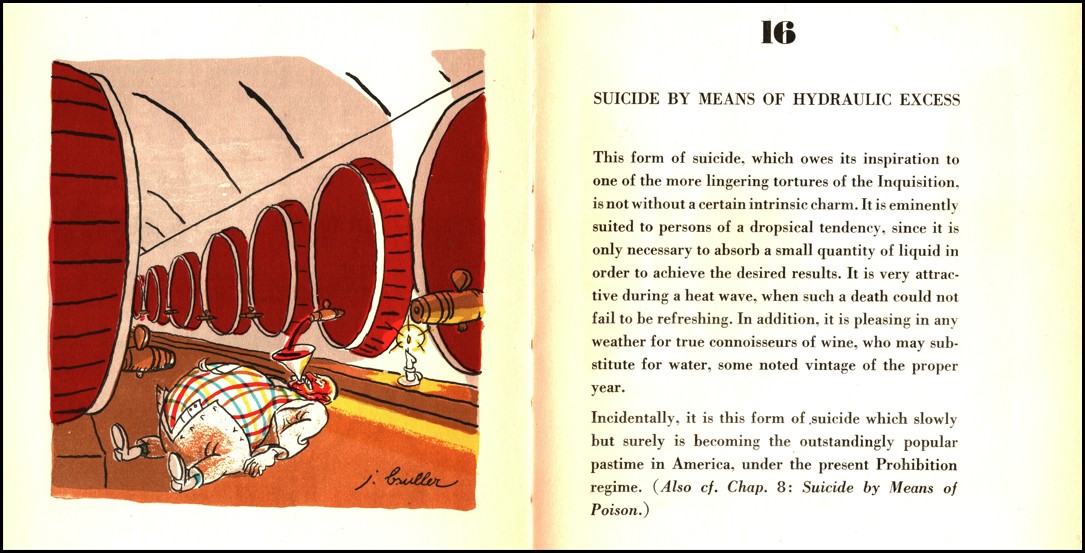
… no attempt had been made to rewrite the book for American sensibilities – the images remained grotesquely Parisian…
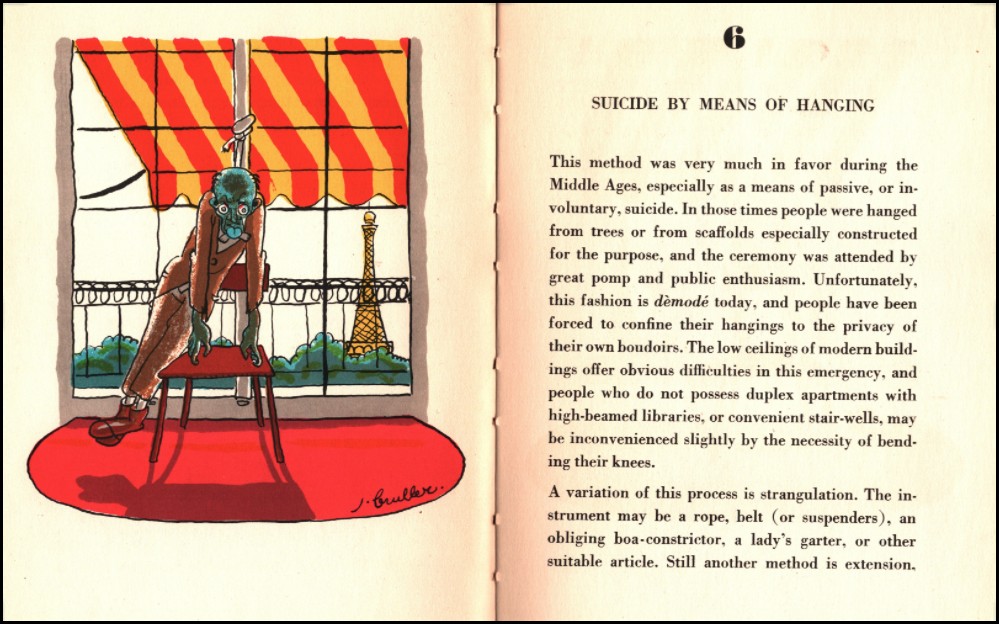
…or elegantly classical.
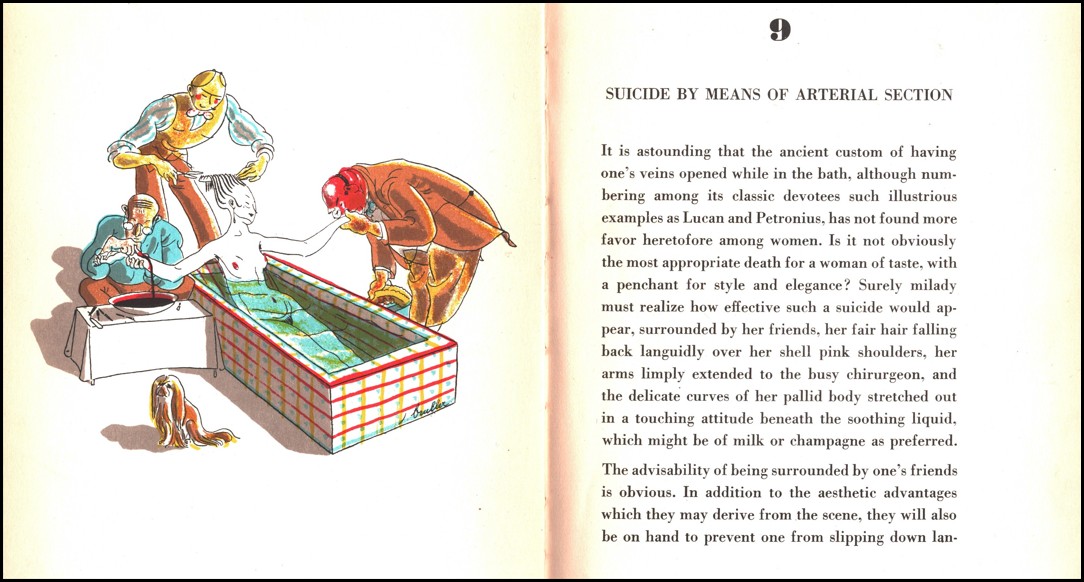
Bruller remained a cult favorite at best until World War II. In 1942 he cofounded an underground press to circumvent Nazi censorship and adopted the pseudonym Vercors, which he kept for the forty books he published over the next forty years. He gained lasting fame from his first book Le Silence de la mer (The Silence of the Sea) also in 1942, an attack on the collaborators who were aiding the Nazis. The war shook his youthful nihilism and he spent most of the rest of his career examining morality, blind hatred, and the treatment of Others. Wikipedia lists his serious books and does not mention his juvenilia, even Un homme coupé en tranches (A Man Cut Into Slices) from 1929, a similar picture/text book. “It was while preparing my second album that I began to think a little, and to ask myself what we were doing on earth,” he later said.
Americans probably know him best for two books which were translated into English. You Shall Know Them (1952) probed deeply into the very definition of humanity, in a court case spurred by the murder of a missing link found in Africa. The paperback edition has – to an author like me – the best cover in the history of publishing.

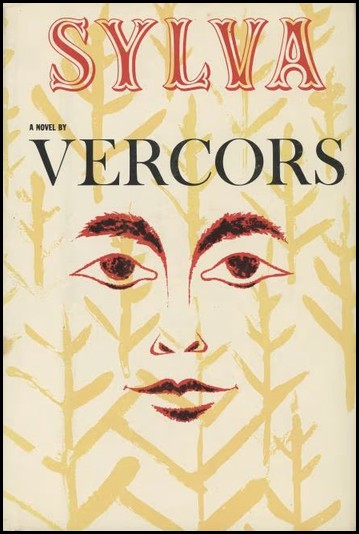
Tackling the theme from another direction, Sylvia (1961) told the story of a fox in a daze when turned into human form, and ponders when and if love can help her beome a person. The translation was nominated for a science fiction Hugo Award in 1963.
Bibliography of Humorous Works
- 1930 – 21 Delightful Ways of Committing Suicide, illustrations by the author


You must be logged in to post a comment.